
Blog Feed

Posted in Historic Characters

The Heart of a King

Robert the Bruce-King of Scotland

Robert the Bruce (also known as Robert I) is one of the most celebrated and respected kings of Scottish history. Even to this day, 700 years later, monuments and statues are still being erected in his honor, books are still written about him, and movies are still being made.

Monument to Robert the Bruce~Stirling, Scotland / photo: Tonya U. Brown, 2017

A Little Back History

In the late thirteenth century, Scotland was plunged into a period of political turmoil. The seven-year-old heir to the Scottish throne, Margaret, the Maid of Norway, had died before her coronation, leaving the throne empty and thirteen men vying for the position.

However, the King of England, Edward I had other plans. He exerted a feudal superiority, treating Scotland like a vassal of England. Edward appointed John de Balliol to take the Scottish throne. John was heavily influenced by Edward, putting him out of favor with the Scottish nobility.

The nobles deposed John and set up a council to rule instead. This, of course, angered Edward and goaded him to invade Scotland, starting the Wars for Scottish Independence. When Scotland was defeated in 1296, John abdicated, leaving Scotland without a king once more.

Enter Robert the Bruce

Robert was one of the many men who claimed a right to the Scottish throne. He was known to have led supporters of the rebel, William Wallace (of Braveheart fame) during the Wars for Scottish Independence. However, he was also known to be in good graces with the English king from time to time as well. But any goodwill that might have been shown to him by Edward came to an end in 1306, when Robert killed the cousin of the appointed Scottish king, John.

1797 painting of Robert the Bruce by unknown artist~The Granger Collection, New York

Questionable Actions

When Robert’s loyalty to Edward was called into question, he went right to the traitorous source: the cousin of John de Balliol, John (“The Red”) Comyn. Adamant opposer to English Rule, and another rightful heir to the Scottish throne, Comyn may have tired of Robert’s vacillations between English rule and Scottish rights. He met with Robert at a church at Dumfries on February 10, 1306. An argument broke out when Robert confronted Comyn on his reports to King Edward about Robert’s possible betrayal.

Here is where history gets a little cloudy. Some say Robert met John Comyn with all intentions of killing him. Other historians think that an argument broke out, and in a fit of passion Bruce struck Comyn, taking him down. When he asked after Comyn’s wellbeing afterward, one of Bruce’s supporters decided to take it upon himself to make sure the job was done.

The difference in that time period is comparable to our current U.S. laws differentiating between murder and manslaughter.  Was it cold-blooded premeditated murder, or a hot-blooded lashing out that resulted in someone’s death?  Opinions vary and depending on which way you look at it could determine Robert’s popularity among the people, or lack thereof.

Either way, one thing remained: he had taken someone’s life within the walls of a holy sanctuary. This caused him to be excommunicated from the church and may have tormented Robert for the rest of his life.

Death of a Warrior

Many years later, the man who is most famous for breaking the English hold over Scotland at the Battle of Bannockburn, died at the Manor of Cardross, near Dumbarton.  His body was buried in the Dumfermline Abbey, but his sternum was cut open and his heart removed so that it might be buried elsewhere. Some historians say that it was Robert’s one unfulfilled wish to go on a crusade. For this reason, his heart was put into a metal casket and borne about the neck of his close friend, Sir James Douglas as he set off for a crusade to Jerusalem.  However, the crusade never came to fruition and instead Bruce’s men were sidetracked to Spain where Alfonso XI of Castile was instigating a campaign against the Moors of Granada. There, Douglas was killed, and Sir William Keith brought Robert’s heart back to Scotland. It was buried at Melrose Abbey, (a place repaired several times throughout Robert’s reign and with his funding),  according to his wishes.  

Other tradition holds that Bruce wanted his heart to be buried at Jerusalem. The reason for this wish could lead back to his excommunication from the church. Local tradition believes that Robert the Bruce wanted his heart buried in Jerusalem to atone for the sin of his murder of John Comyn at the Franciscan church 23 years earlier.

Whatever the reason, we know that his heart unfortunately did not make it to Jerusalem (unless you believe some conspiracy theories that hold that it was actually smuggled into Jerusalem hundreds of years later). However, what we do not know for sure is whether the small casket unearthed at Melrose Abbey in 1920, reburied, then unearthed again in 1996 are the actual remains of Robert the Bruce.

The heart was reburied again in 1998 and a marker has been set at the new burial place. For the most part people accept that it truly is Robert’s heart. Although it may have been Bruce’s wish to have his heart buried at Jerusalem, no one can deny that the rightful place for the heart of this beloved Scottish hero belongs in the soil of his hard-won land.

The heart of Robert the Bruce, buried at Melrose Abbey in Roxburghshire, Scotland / photo: Tonya U. Brown , 2017

The above inscription on the stone comes from a long, narrative poem by John Barbour called The Brus. It is a historic account of Robert the Bruce’s heroic deeds during the Scottish Wars for Independence. In Early Scots it reads: “A noble hart may have no ease, gif freedom failye” In English it is translated as: “A noble heart cannot be at peace if freedom is lacking”. Notice how the heart is entwined with the Saltire, the symbol used on the Scottish flag.

Here are a few more pictures I took at Melrose Abbey. You can click on the picture to open and expand for a bigger, better view. I hope you enjoy!

I allow the use of my images in this way:
Creative Commons License
With Creative Commons you are free: To Share: Copy, Distribute, and Transmit the image
Under these conditions:
Attribution: Attribution to TonyaUBrown and theroseandthethistle.com must be made along with the image.

You may not print pictures without permission.

Posted in Book Review

The Secret Heir by Janice Broyles

Ok, so this book is not about England or Scotland, nor is it medieval to 16th century. However, The Secret Heir is an excellent fictionalized retelling of a historical story about the ancient kingdom of Israel, and the enigmatic shepherd boy who rose from lowly sheep herder to the mighty warrior, King David. It’s ok to get out of our comfort zones from time to time, right? 😛

David is a young man, anointed to be king (unbeknownst to the current king) stuck on the Judean hillside, watching his father’s sheep. He longs to be more useful to his father than just another shepherd and to fulfil the role for which he has been anointed. When he receives a summons to come and play the lyre for the troubled king of Israel, David is one step closer to the life he longs to live. But he is also closer to danger as he endeavors to keep a secret from the king that could cost his life and the lives of his family.

In The Secret Heir, David comes to life as more than just a Biblical character. Anyone familiar with David knows he struggled with insecurities, depression, and loneliness. Yet, we see a clearer picture of how he used his music and poetry to draw strength from God and overcome his weaknesses.

David Slaying Goliath ~Peter Paul Rubens~ Wikimedia Commons

One of my favorite parts of The Secret Heir was when David, fresh from the hills of Bethlehem, comes face to face with the intimidating, well-trained Philistine giant, Goliath. It was very easy to become emotionally involved in this scene; for Janice breathed new life into this old, familiar story, and I felt as if I were right there on the battlefield with David. <chills>

David and Michal ~Virginio Grana ~ Wikimedia Commons

Another interesting piece of this story is that of Michal, the daughter of the paranoid King Saul. Michal often gets a bad rap in history and Ms. Broyles opens our eyes to the young woman who, like so many females of her time, was just another pawn in a very dangerous political game.

This is a story of a warrior, fueled by the love for a woman beyond his reach, driven by a desire to be someone great, and anointed by God who saw him as something more than he was.

The Secret Heir follows the life of David of Bethlehem from shepherd to warrior. I look forward to the release of Janice’s next book in this series, tentatively called The Runaway Heir.

Janice Broyles, Ed.D is an author and instructor at Livingstone College. She is a Michigan transplant currently living in North Caroline with her husband and two children. Learn more about Janice and her books at her website:

www.janicebroyles.com

Or, connect with her on Facebook at Janice Broyles, Author or on Twitter at @JaniceBroyles1

The Secret Heir can be purchased at Barnes&Noble or Amazon.

Posted in castles

Dundas Castle

Photo by: A.D.Wheeler/The Explorographer

Dundas Castle

The one in Edinburgh, Scotland, right? Nope, the one in the secluded forests of the Catskill Mountains in the good ole U.S. of A.

How odd (or maybe not, considering it’s me :P) that one of my first posts is not about Scotland, England, or even the sixteenth century for that matter. It is about a place that I have been obsessing about since seeing an abandoned house video on YouTube. The place is Dundas Castle in Roscoe, New York and although abandoned, it is hauntingly beautiful and still full of potential.

Shrouded in mystery, the original country house, called Craig-E-Clair, was expanded in 1915 with the beginning of the building of the castle now known as Dundas. Built on 964 acres, the massive estate has 40 rooms, and took the owner and originator of the idea, Ralph Wurts-Dundas, over eight years and more than a million dollars to construct.

Sadly, since it took over eight years to build, Mr. Wurts-Dundas did not live to see its completion. Ralph died in 1921, and construction stopped in 1924. The finishing touches were never added, and neither he nor his wife, Josephine, ever lived within its walls. Josephine had been committed to a sanatorium and upon her death, the castle passed to their only daughter, Muriel, who was a child at the time.

But the tragedy of Dundas Castle doesn’t end there. Muriel Wurts-Dundas, who had only visited the castle a handful of times, married James R. Herbert Boone and moved to England, where she too eventually was committed to a mental health institution. In her absence, Dundas had passed through the hands of several caretakers before being sold to the Prince Hall Grand Lodge of the Masonic Order in Manhattan.

Although Dundas Castle was used as a children’s summer camp for some time, no one has ever lived there, and it still stands empty to this day.

I just had an epiphany!  My house is older than this one.  It was built in 1890. Woohoo!

Feel free to click on the images below to view photographer, A.D. Wheeler’s other photos of Dundas Castle. Or, check out his other photos and the history behind the pics at https://portfolio.theexplorographer.com/Landscapes/Dundas/

<strong><a href=”https://TheExplorographer.com” target=”_blank” rel=”noopener”>Photo by: A.D.Wheeler/The Explorographer</a></strong>

Want to feel like you’re really inside Dundas Castle? Watch the YouTube video that spurred my interest.

Want to read more about Dundas? Take a look at these sites:

http://dundascastle.synthasite.com/

https://www.atlasobscura.com/places/craig-e-clair-castle

One final note…

I have not been to Dundas Castle in Scotland, but I have been to a few others there. Can you tell this is one of my favorite things? Obsessed, I tell ya. Ob-sessed. It could be worse, right?

The following pictures are my own. Please see below for usage permission.

Now go be the queen (or king) of your castle...and have a blessed day. 

I allow the use of my images in this way:
Creative Commons License
With Creative Commons you are free: To Share: Copy, Distribute, and Transmit the image
Under these conditions:
Attribution: Attribution to TonyaUBrown and theroseandthethistle.com must be made along with the image.

You may not print withouth permission.

Posted in Uncategorized

Welcome!

The farther backward you can look, the farther forward you are likely to see.”

— Winston Churchill.


I am so glad you’re here. If you found me through Twitter, you probably already know that I am a writer of historical fiction who loves all things British–and in particular, Scottish. If you came here from Facebook, then you probably already know that I have written a book about Mary, Queen of Scots. And if you know me from Instagram then you know that I like to post pictures of my travels and my kids–the two-legged ones and the four-legged one.

If you know me in person, then you know that I have a huge obsession with 16th century Europe and love to read about the Reformation and what life was like in that time period. I also like to read about the kings and queens of the medieval time period. You are likely to find any number of those topics on this blog.

I hope you love history as much as I do. If you do, then perhaps you’ll hang around and chat a while. Feel free to comment on what you liked, what you didn’t, and what topics you might like for us to discuss further.

Thanks for stopping by!

Tonya Brown

P.S. If you enjoy my blog, please like, subscribe and share with others!
Posted in Books

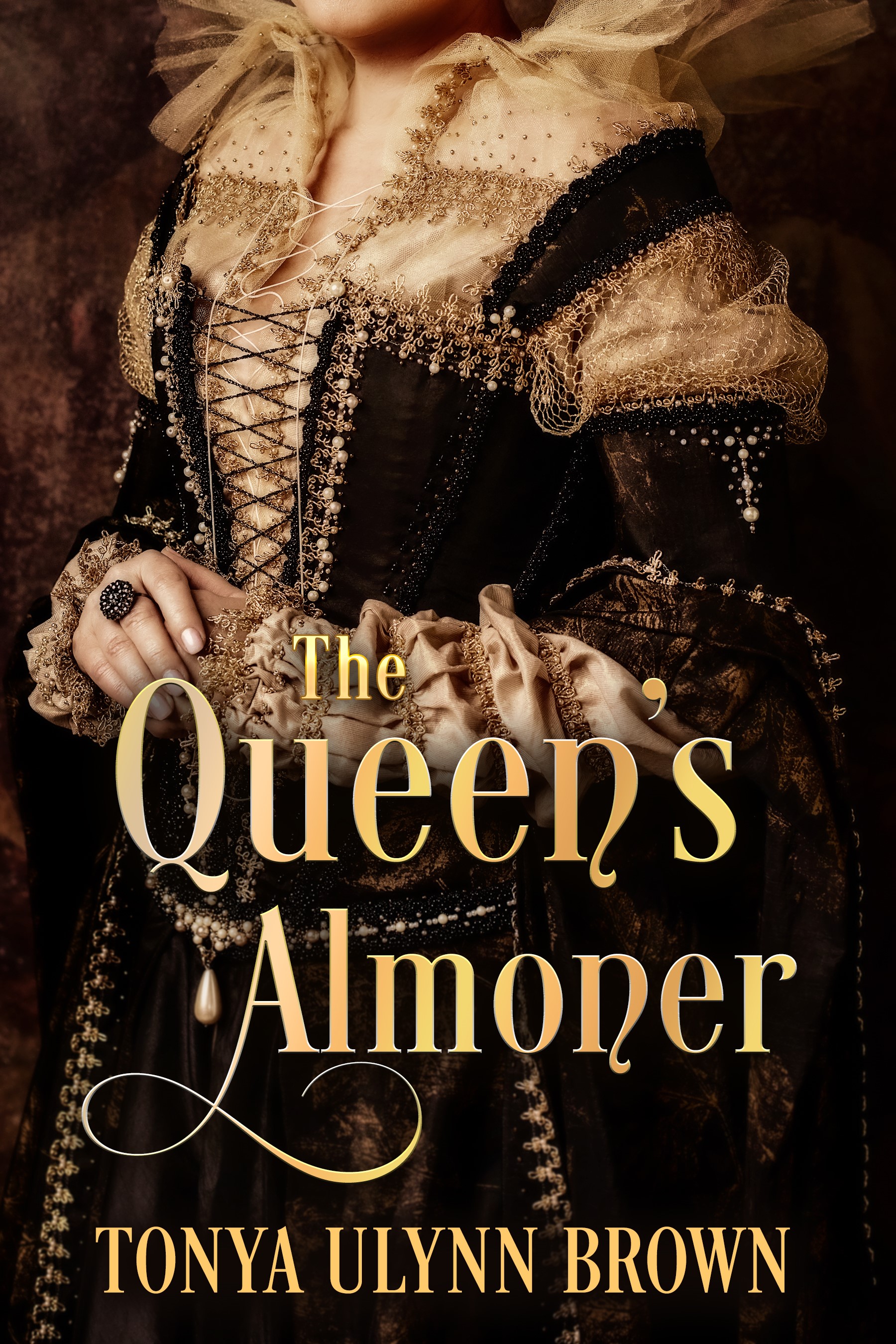
The Queen’s Almoner

Official The_Queens_Almoner Book Cover Front

Sometimes loyalty to the queen comes at a cost.

Thomas Broune is a Reformer and childhood friend of the young queen, Mary Stuart. When Mary embarks on a new life in her estranged homeland of Scotland, Thomas is there to greet her and offer his renewed friendship. But the long-time friends grow closer, and Thomas realizes his innocent friendship has grown into something more. Yet he is a man of the cloth. Mary is the queen of the Scots. Both of them have obligations of an overwhelming magnitude: he to his conscience and she to her throne.


When he must choose between loyalty to his queen or his quiet life away from her court, he finds that the choice comes at a high price. Driven by a sense of obligation to protect those he loves, and crippled by his inability to do so, Thomas must come to terms with the choices he has made and find a peace that will finally lay his failures to rest.

Available Now

    amazon logo        barnes and noble logo        late november literary


Connect with me!


Logo

                                            goodreads logo      instagram logo     facebook logo      twitter logo