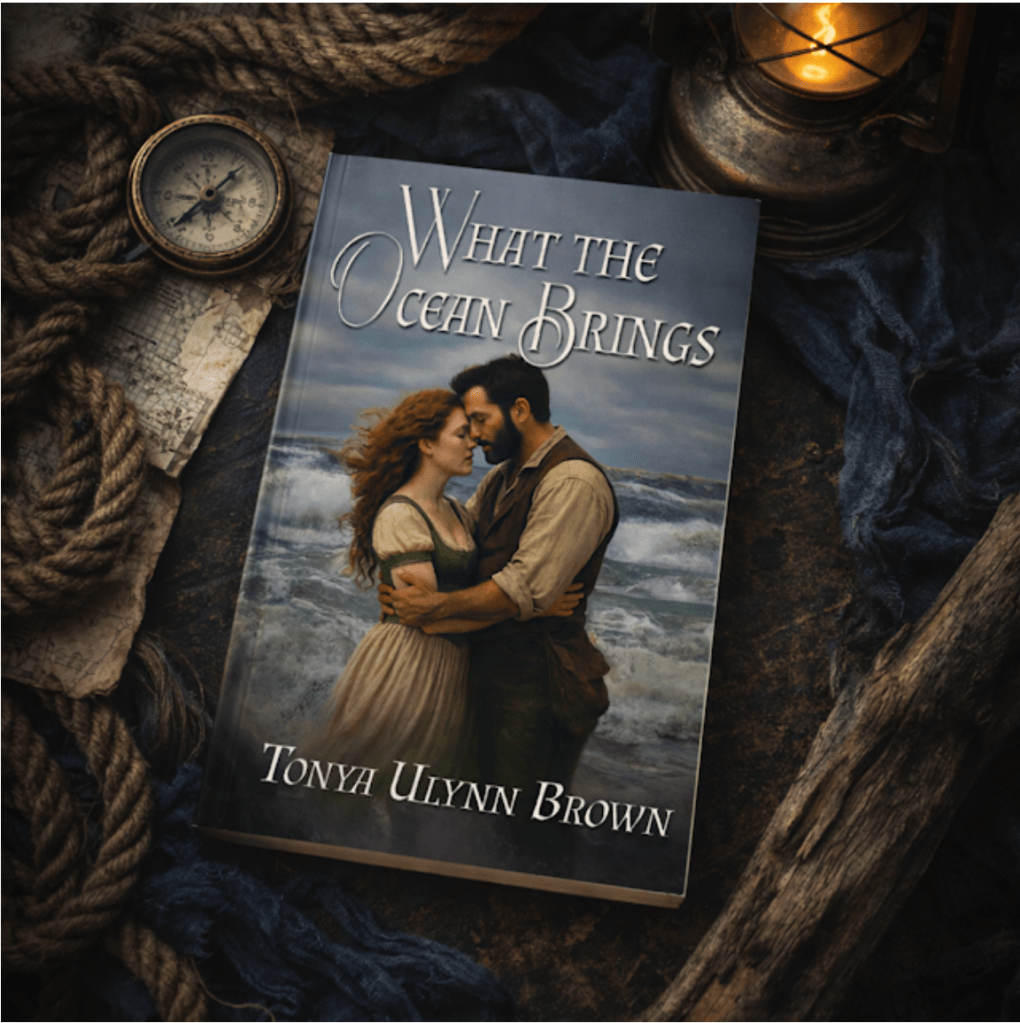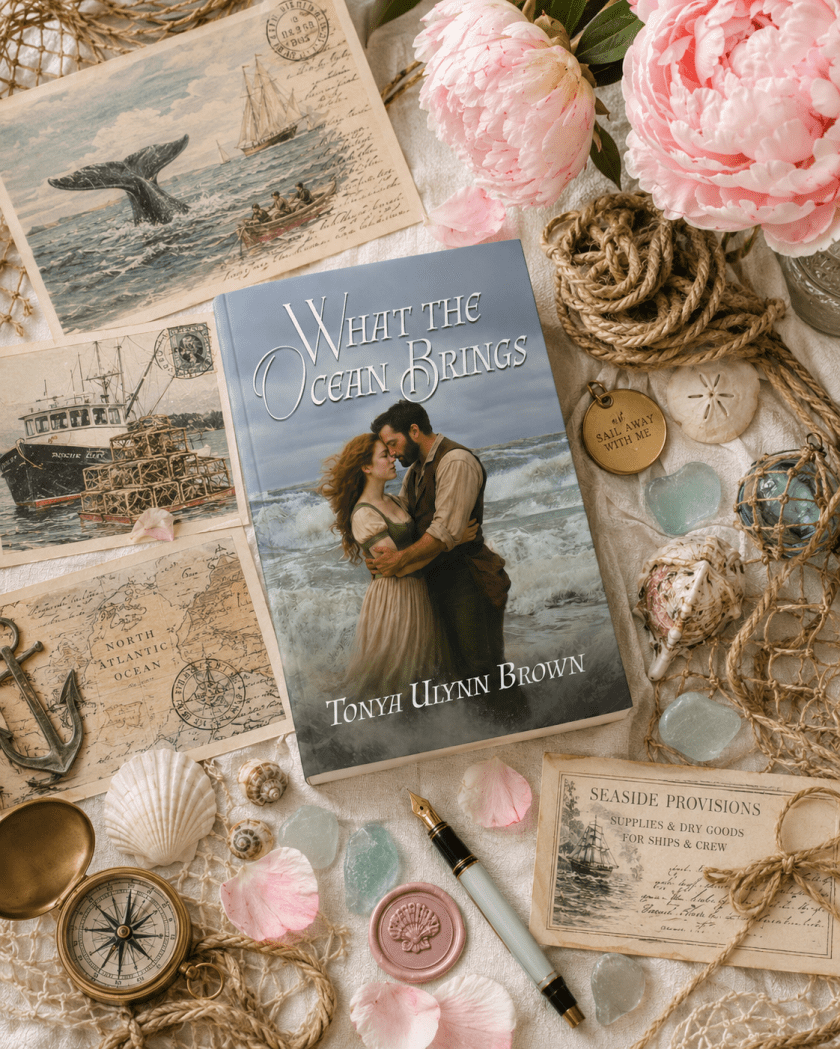
It’s Publication Day for What the Ocean Brings!
If you haven’t had a chance to check out my newest release, take a look below. My fourth Historical Romance novel takes place in 19th-century Canada, during the Great Famine in Ireland.
Quebec, Canada, 1847.
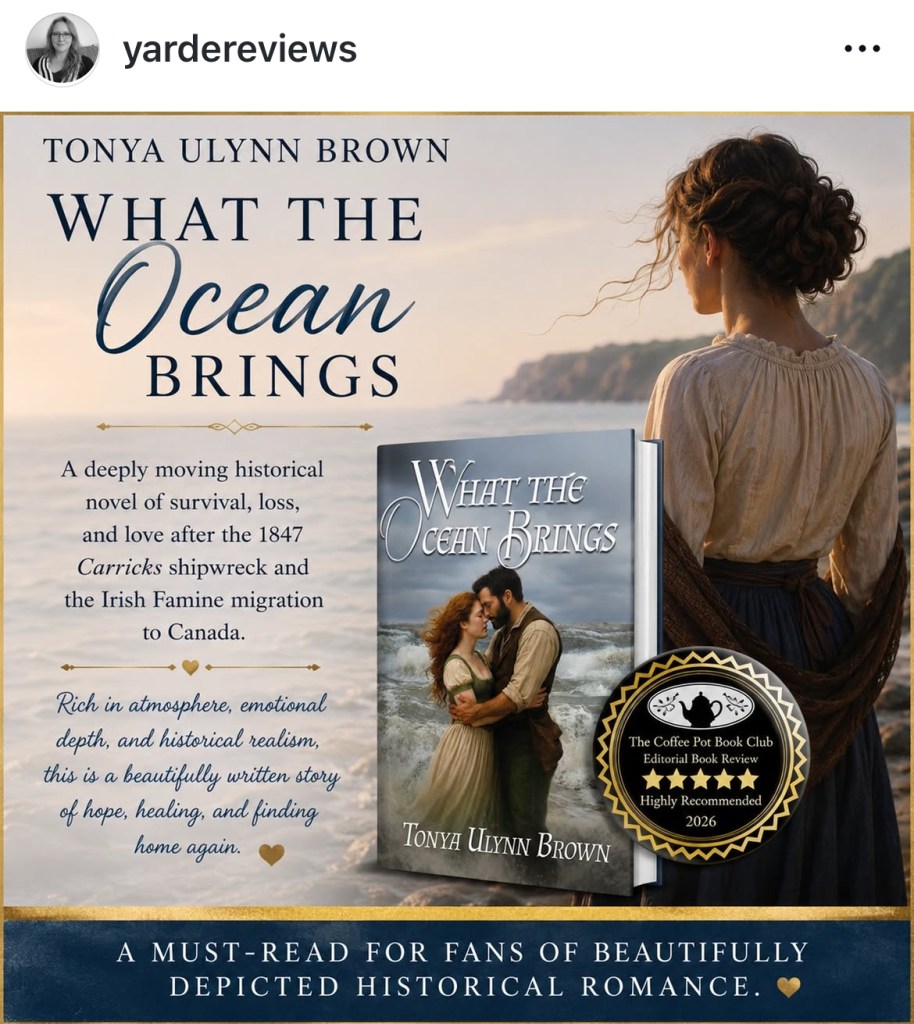
While trying to escape the Potato Famine, shipwrecked Irish immigrant Breanna Clarey awakens injured and alone on an unfamiliar beach. To make matters worse, she has been separated from her family, and her friend, Crow, is lying dead at her feet. But when Dawson Roberts, a reclusive fisherman with a guarded past and big dreams for his future, finds Breanna, he puts his plans on hold to offer her shelter and help find her family.
But life for an Irish immigrant isn’t easy. Facing a deadly quarantine station, dangerous immigration officials, and grief over her missing family, Breanna struggles to exert her independence and navigate her new world. While Breanna confronts an unknown future, Dawson is plagued by a painful past. They each must determine their own course, even if it means ignoring the pull they have on each other.
When the future takes an unexpected turn, only the ocean that has brought them so much devastation can help them find their way back to where they belong.
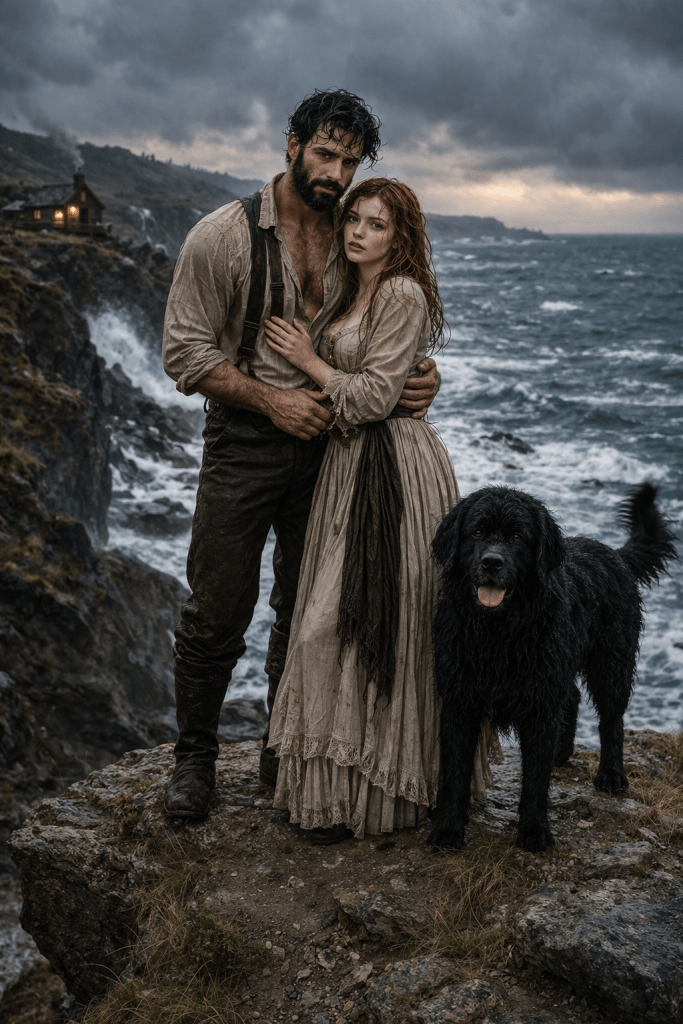
My books usually include an animal of some sort. The hero of What the Ocean Brings is Dodge, a protective and overly friendly Newfoundland.

The History Behind What the Ocean Brings
Although Breanna and Dawson’s story is fictional, the tragic shipwreck of
the Carricks of Whitehaven is not. In March 1847, nearly two hundred Irish
men, women, and children boarded the Carricks at Sligo Harbor in the hope
of a better future, intending to migrate to Quebec City, Canada. A blinding
snowstorm caused the ship to miss the entrance to the Saint Lawrence River,
and the boat crashed upon the shore. Most of the people would die, never
having enjoyed the new life they dreamed of in North America.
I was inspired by these events after reading a story in The Washington
Post in 2019 that told of a mass grave that had been discovered in Cap-des
Rosiers. In 2011, a storm swept along the coast of Gaspé in Quebec, Canada,
uncovering several sets of children’s bones. Over the next couple of years,
many more bones were found. The grave was eventually traced to the
Carricks’ shipwreck. Of the nearly two hundred people who boarded the
ship in Ireland, fewer than fifty survived. Many of the victims were never
found.
A monument has been erected near the site of the unmarked grave to
honor these brave immigrants. If you are interested in learning more about
the Carricks and the Irish immigrants from Sligo, a documentary was
produced in 2020 by Celtic Crossing Productions entitled “Lost Children
of the Carricks.”
The film can be viewed at the link below and is worth watching.
Read the original Washington Post article that inspired the book, What the Ocean Brings here.