There is no doubt that Mary Stuart, the Queen of Scotland who was executed by decree of Queen Elizabeth I has become one of the most loved, or at least one of the most talked about monarchs of all time.
There has been much study on Mary and depending on what side of the historical fence you may sit, you will either think she was a treasonous, power-hungry floozy or an innocent victim of other power-hungry men who used her. Countless books, movies, plays and even television shows have been written about her life. Much of it romanticized, her life has given those of us who love the 16th century and the Tudor era much to debate and dream about.
In the coming year I will be posting a series of blogs that examine some of the people who either had an influence or detriment on Mary’s life in some way. Though she only lived 44 years, she touched and was touched by countless lives that also had an impact on her.
If you are like me, I read a story, see a name, want to learn more about that person and read everything I can get my hands on about them until my thirst is quenched. That is what drew me in to the story and life of Mary, Queen of Scots in the first place. These posts are not meant to be an exhaustive coverage of everyone that Mary Stuart came in contact with. I have chosen just a few of the many people who lived during that time and had some kind of interaction with the enigmatic queen. My hope is that these posts will spark an interest and drive you to want to learn more about the woman, her life and times and the people who we can say make or break Mary, the Queen of the Scots.
Here is the schedule for the upcoming blog posts in the Principal Players Series:
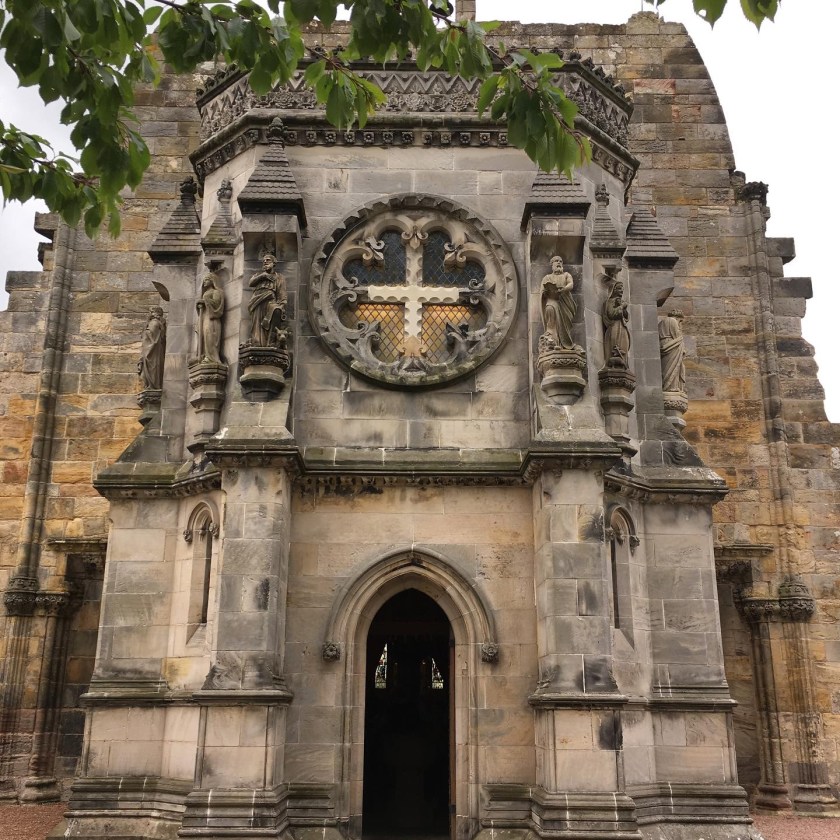
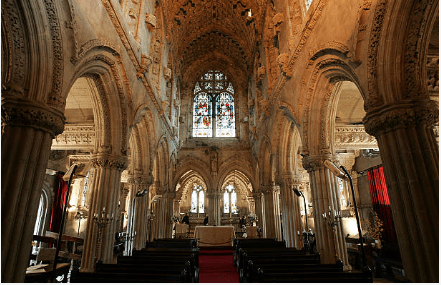
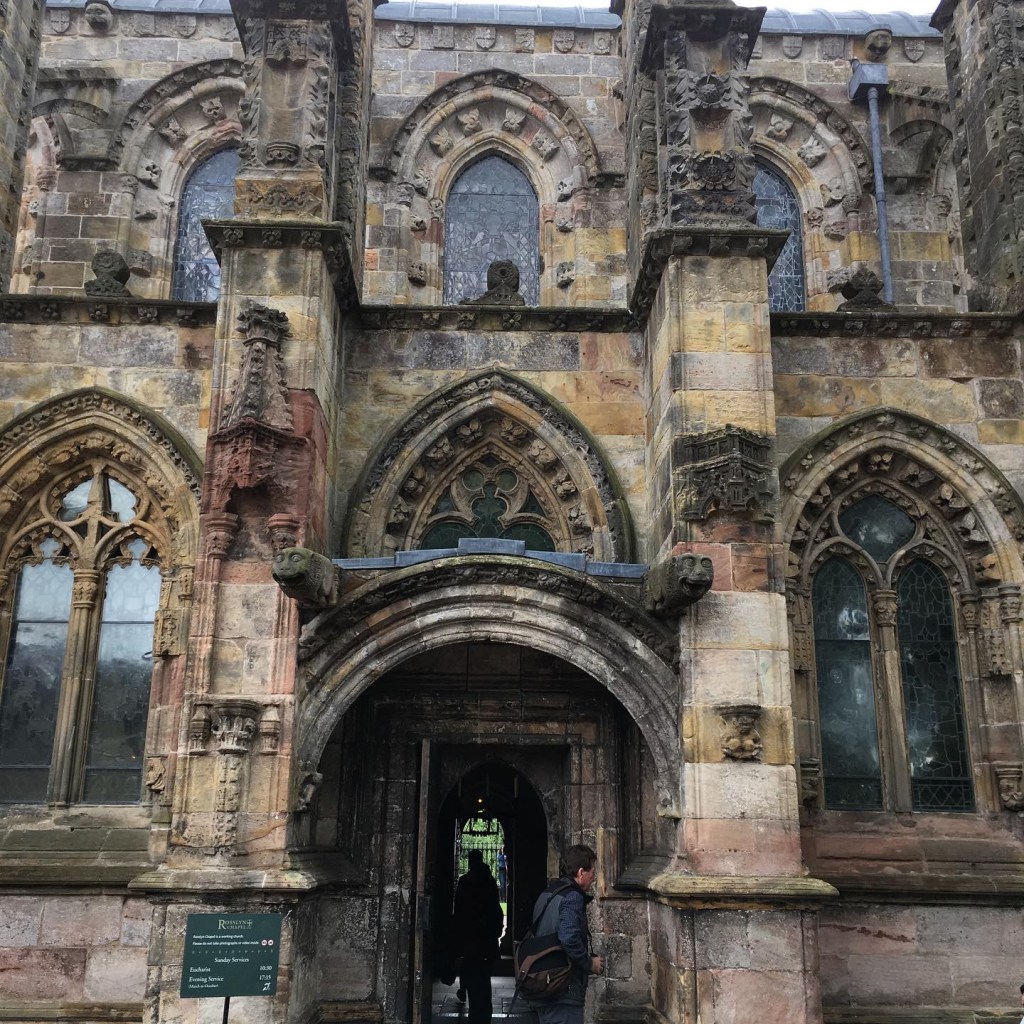
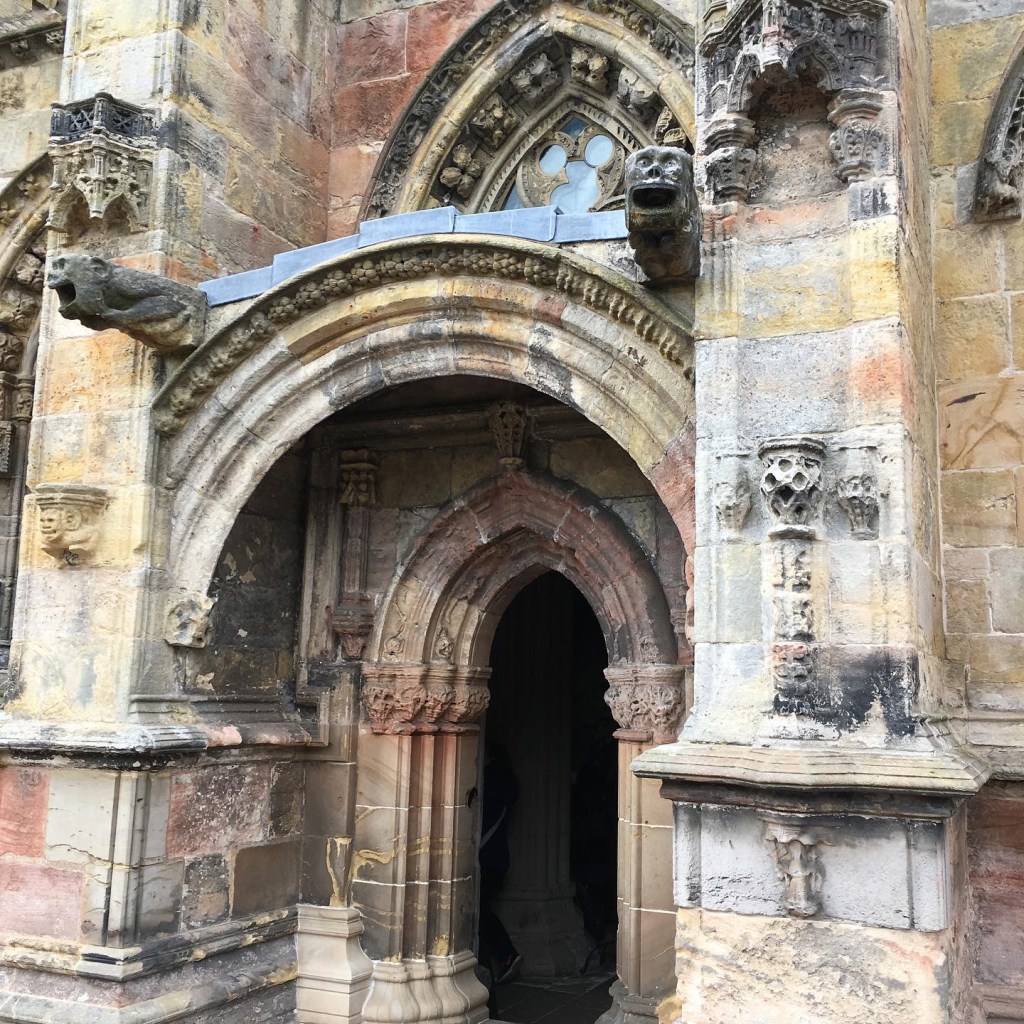
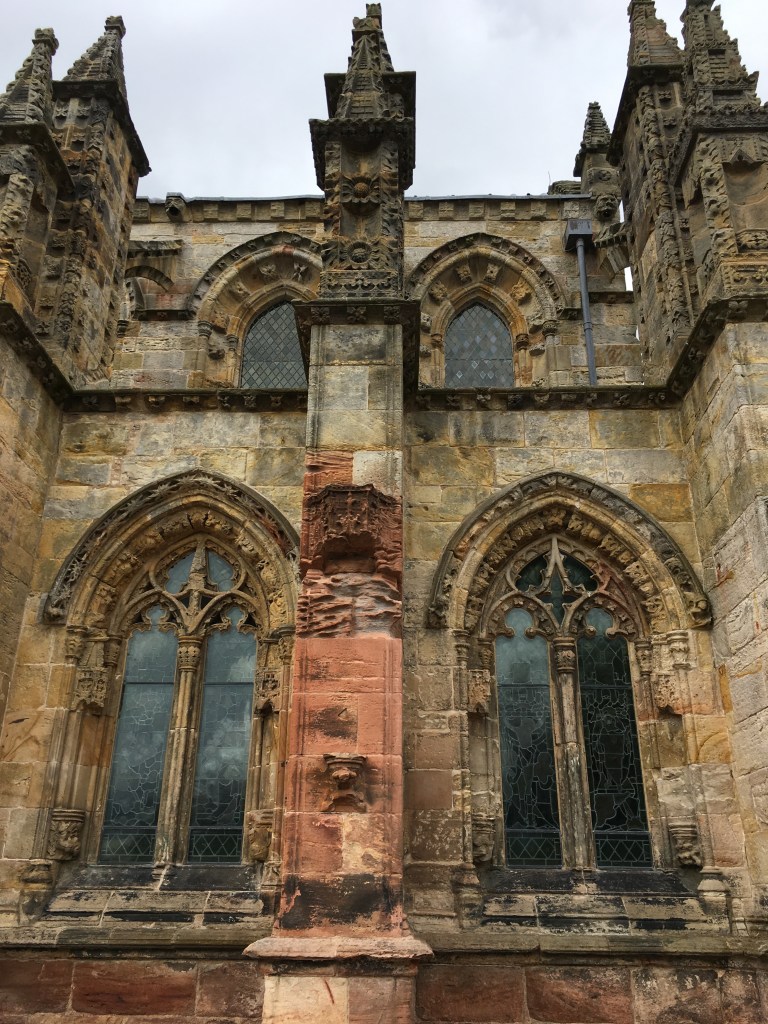
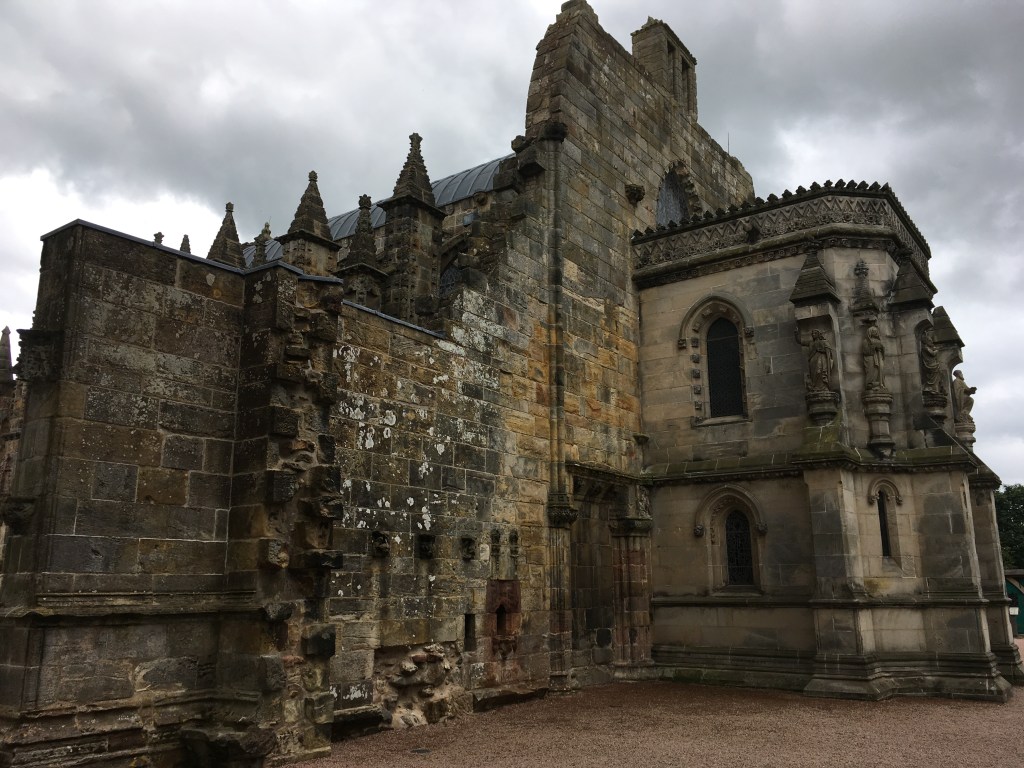
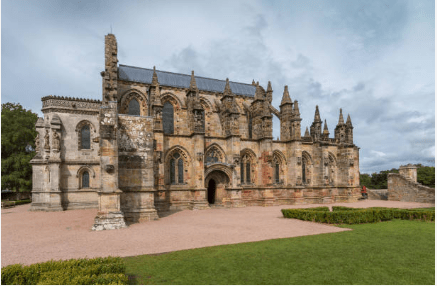
In the heart of Midlothian, Scotland, on a hill overlooking what is claimed to be one of the largest remaining areas of ancient woodland known as Roslin Glen, is a lovely little collegiate church referred to as Rosslyn Chapel. The chapel has suffered the effects of the Reformation and been the inspiration of many writers and painters. It played a prominent part in the best-selling book by Dan Brown, The DaVinci Code and went on to be featured in the movie inspired by said book. Filled with a delicious assortment of mysterious stonework and surrounded by a plethora of (sometimes inaccurate) history, the chapel houses over 500 years of inspiration and enlightenment.
The interior of Rosslyn Chapel, looking toward the altar.
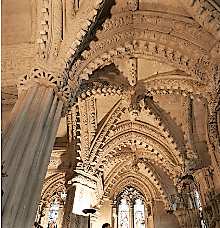
South Aisle of interior
A Worthy Endeavor
Construction on Rosslyn began in 1446. It was commissioned by William St. Clair, Earl of Orkney and Caithness, with the intentions that it would be used to offer prayers for his ancestors and descendants and provide a place of worship for generations to come. It was also to aid in the spread of intellectual and spiritual knowledge. Referring to Sir William’s idea for Rosslyn, Father Richard Hay, author of A Genealogie of the Saintclaires of Rosslyn said, “It came into his mind to build a house for God’s service, of most curious work, the which that it might be done with greater glory and splendor…”
When St. Clair died in 1484 construction on the chapel was halted. Sir William was buried under the unfinished choir section and the chapel was left as it was. Sir William’s son, Oliver, either didn’t want to spend the money, or lost interest in the chapel construction, for he simply put a roof over the choir section and that became what we now know as Rosslyn Chapel. The larger portion of the building that was planned was never finished.
A hundred years later the winds of Reformation would blow through Scotland wreaking havoc on Catholic chapels such as Rosslyn. Another Oliver St. Clair would be commanded to tear down the altars within the chapel as it was reputed as a “house and monument of idolatry.” After the altars were destroyed the chapel was left to ruin.
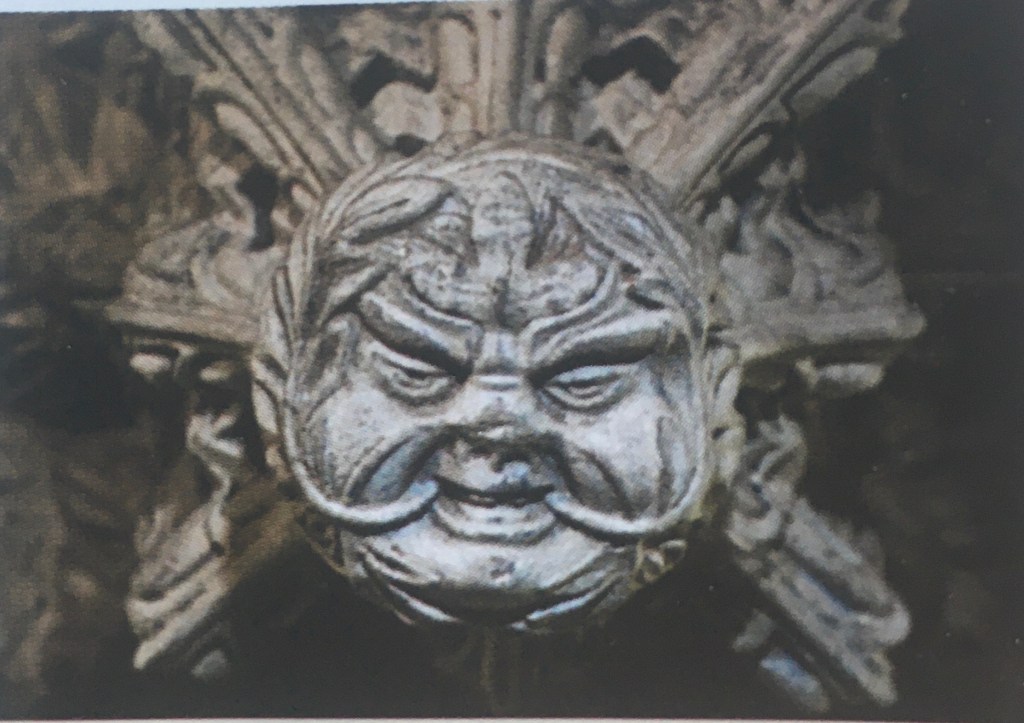
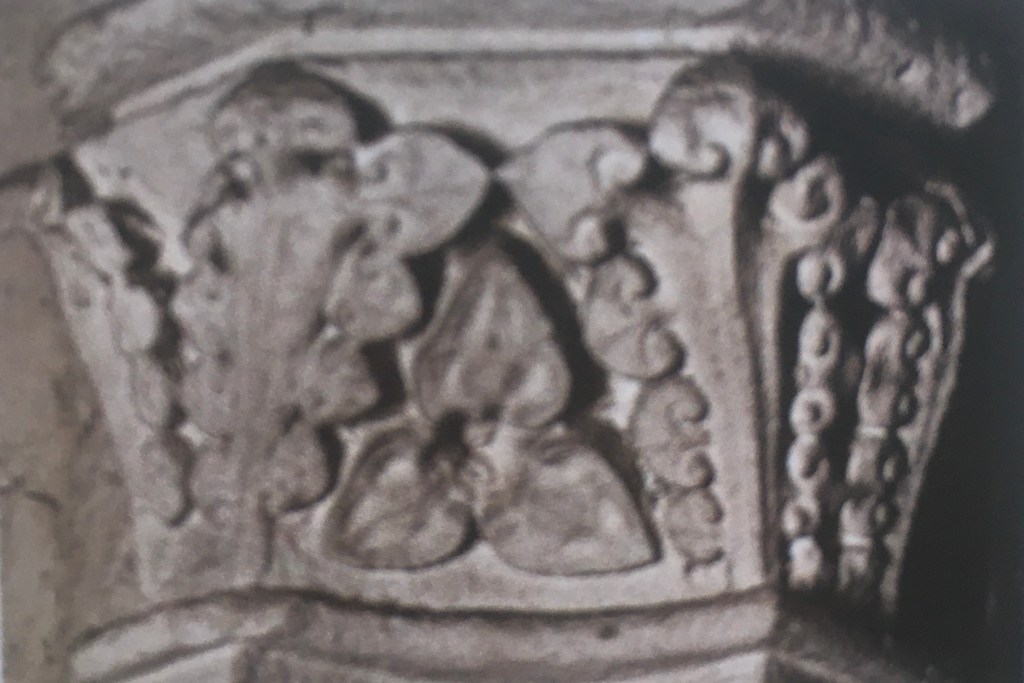
There are over 100 carvings of the Green Man at Rosslyn Chapel. Some claim the Green Man is pagan in origin as the sprouting vines that protrude from the figure’s mouth represent nature’s growth and fertility. Others claim this is a good representation of the Christian’s belief in the rebirth.
The Mystery and Symbolism of the Stonework
According to Father Hay, when Sir William St. Clair began the building of the Rosslyn, “he caused artificers to be brought from other regions and foreign kingdoms and caused daily to be abundance of all kinds of workmen present as masons, carpenters, smiths, barrowmen and quarriers…”
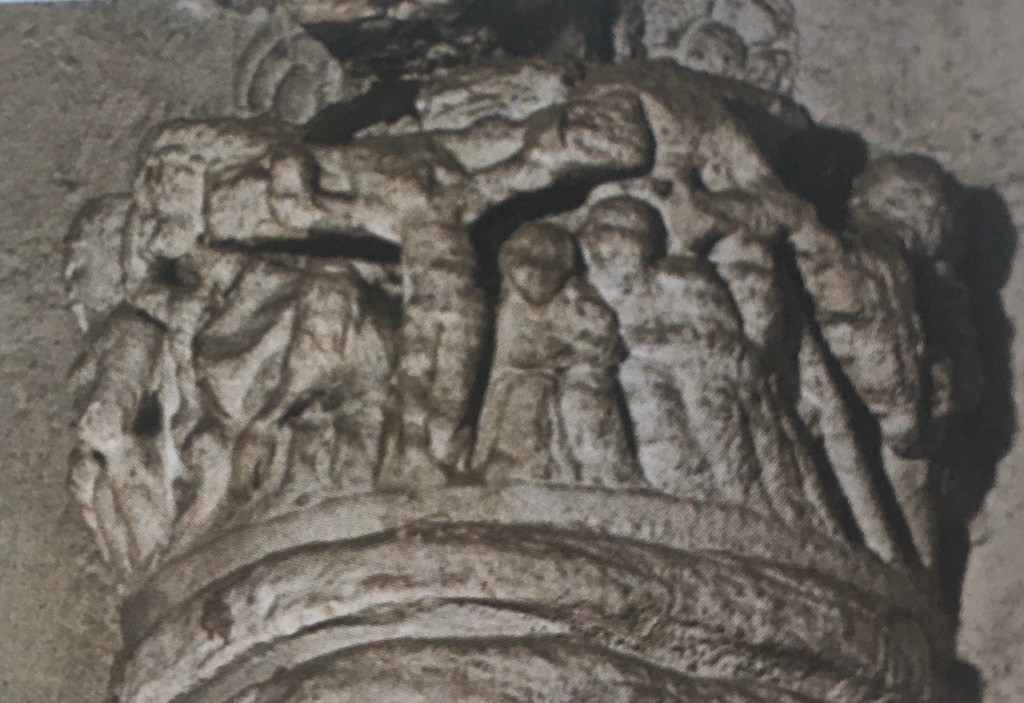
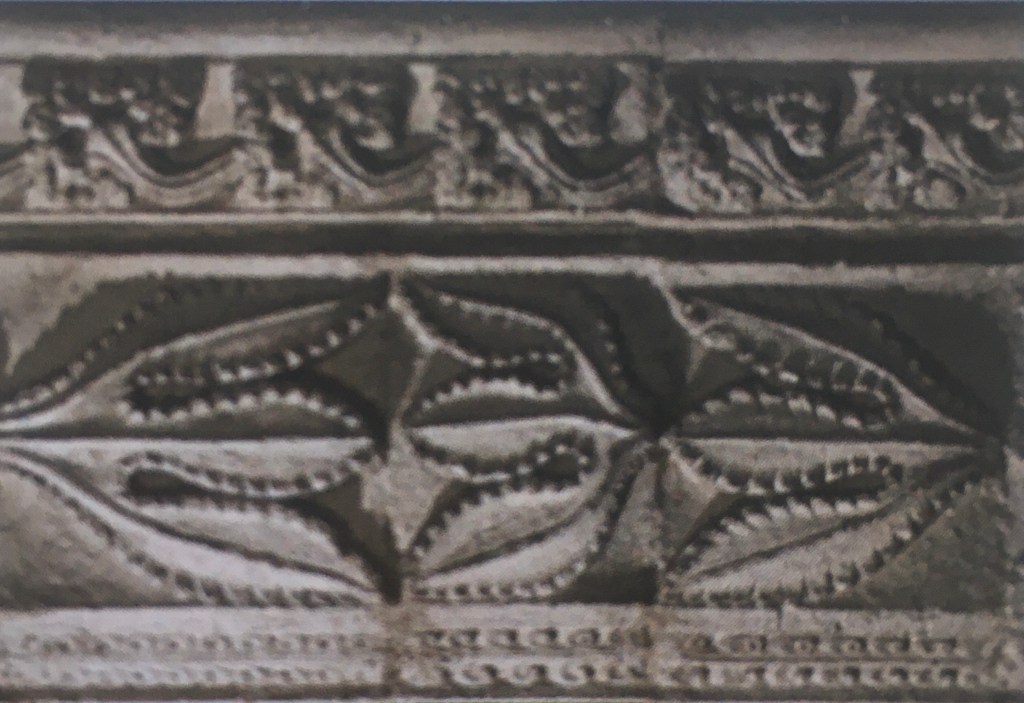
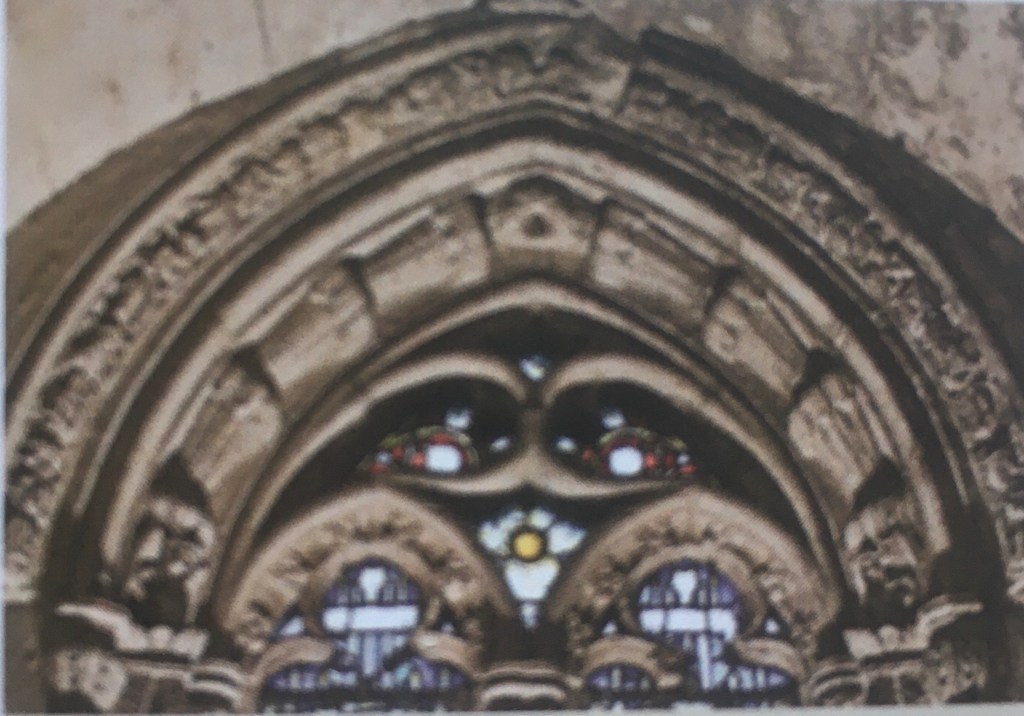
Rosslyn is filled with symbols cut into the stonework of the interior. The result of many artisans, most are of a Biblical nature (it is a church after all). However, not all the Biblical carvings are saintly, as there are several symbols of the devil, fallen angels, sin and death. There are other symbols that have no apparent Biblical reference, and some appear to refer to objects that were not even known to Scotland at the time of the construction. Some stonework and etchings refer to the St. Clair family, and others appear to be practically pagan in nature.
On the left-The Birth of Christ. On the right-The Crucifixion.
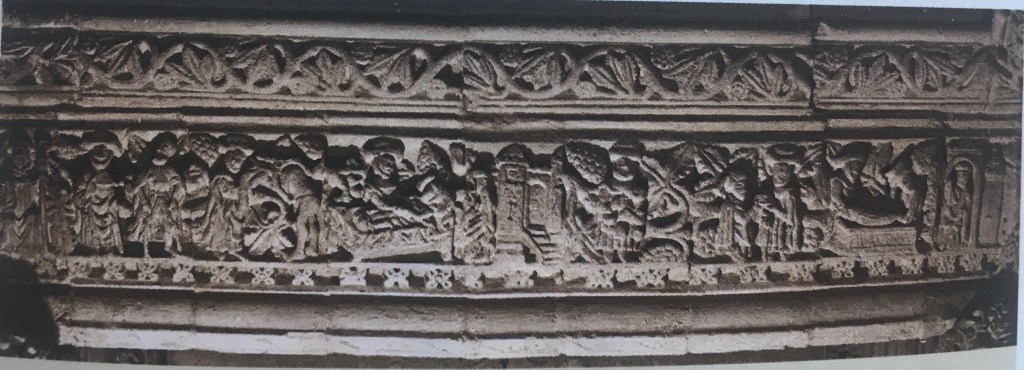
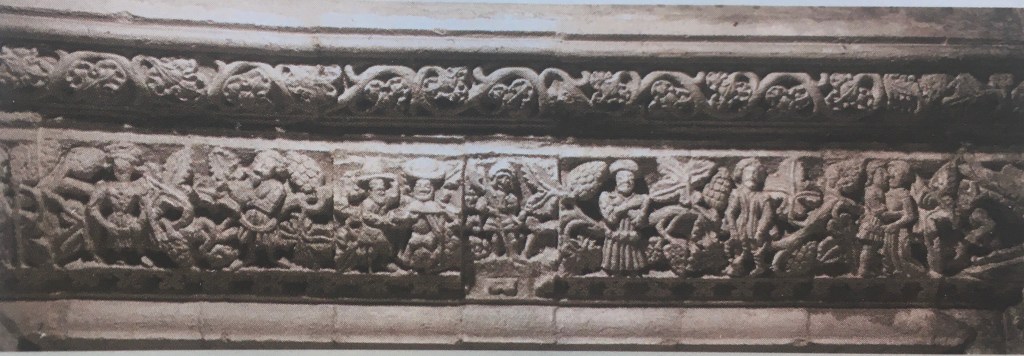
These two lintels are two parts of a moral lesson. On the right is the Seven Acts of Mercy and on the left, the Seven Deadly Sins. The first part is the Seven Acts of Mercy which demonstrate the seven virtues by which people should live. These include helping the needy and feeding the hungry.
The second part, the Seven Deadly Sins, depicts the deadly sins which people should not commit, including greed, anger and gluttony.
One of the Virtues has been transposed with one of the Sins–Greed appears within the Virtues and Charity with the Sins. Could this be a mistake on the part of the artist, or is it meant to suggest that each of us has the capacity for both good and evil? ~Rosslyn Chapel brochure
Left-Dance of Death-look for the skeletons pushing and pulling the reluctant people to meet their fate. The carving symbolizes death’s inevitable triumph over life.
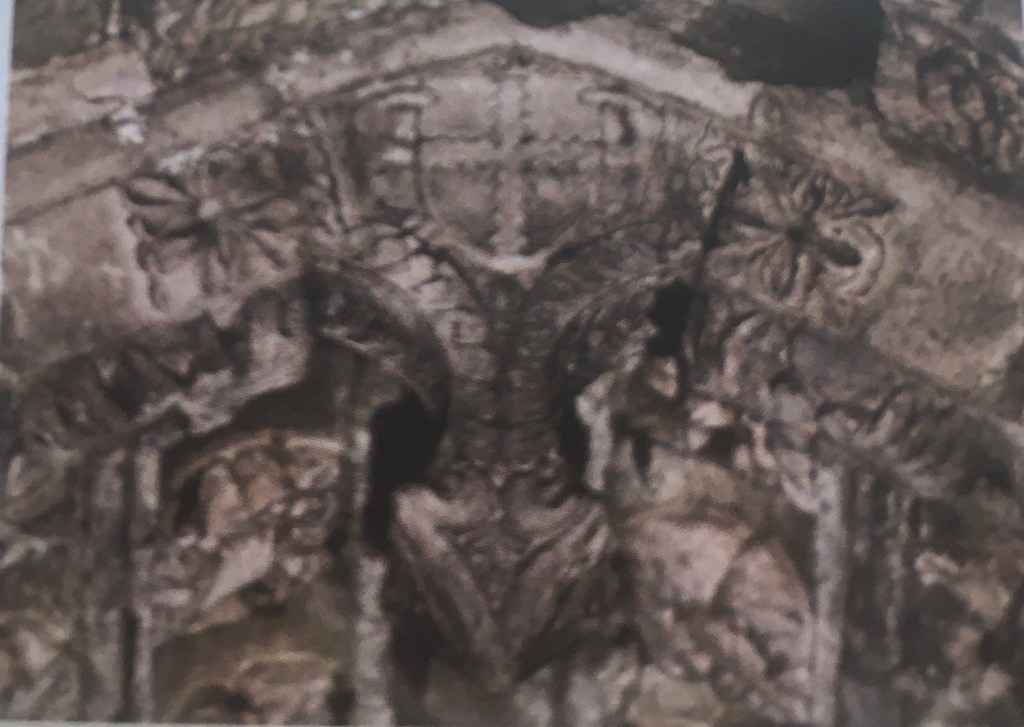
Center-Devil and Lovers-The devil turns away in anger from the two lovers who gaze towards a carved angel, holding a cross, opposite them.
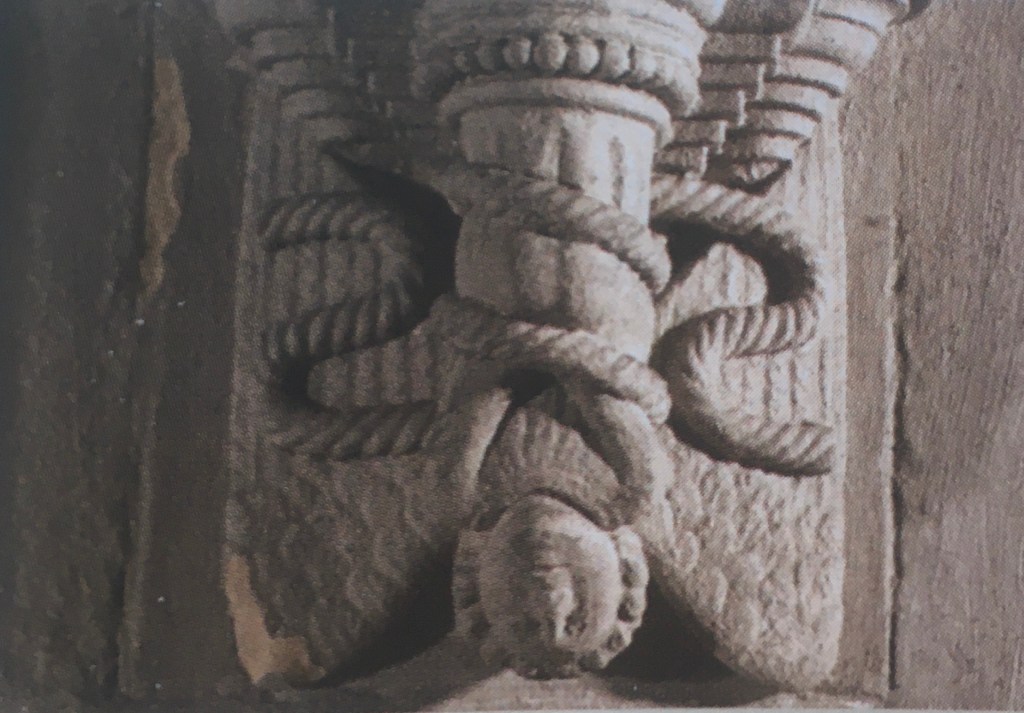
Right-Fallen Angel-There are many carvings in the Chapel with Masonic associations. This one is of the fallen angel, Lucifer, bound in ropes. ~Rosslyn Chapel brochure~
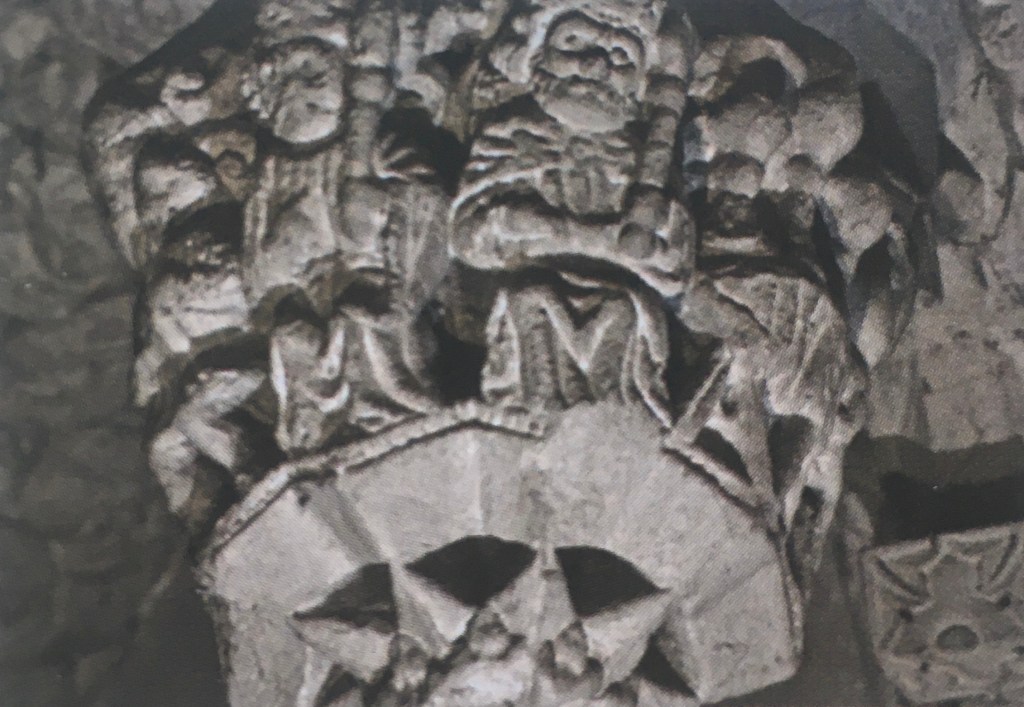
Left-Keystone-This pendant keystone hangs from the Chapel roof. It shows a pair of hands holding a shield with the St Clair family engrailed cross.
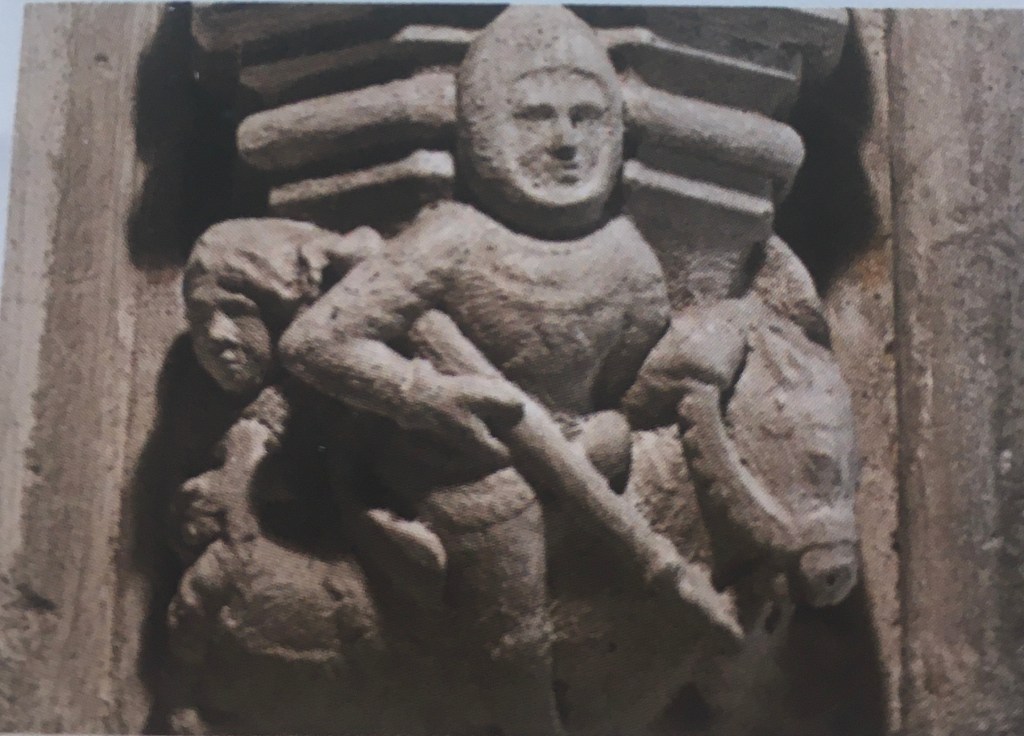
Center-William the Seemly-This knight could be William “the Seemly” St Clair, who is said to have escorted Queen Margaret to Scotland for her marriage to King Malcolm Canmore in 1070.
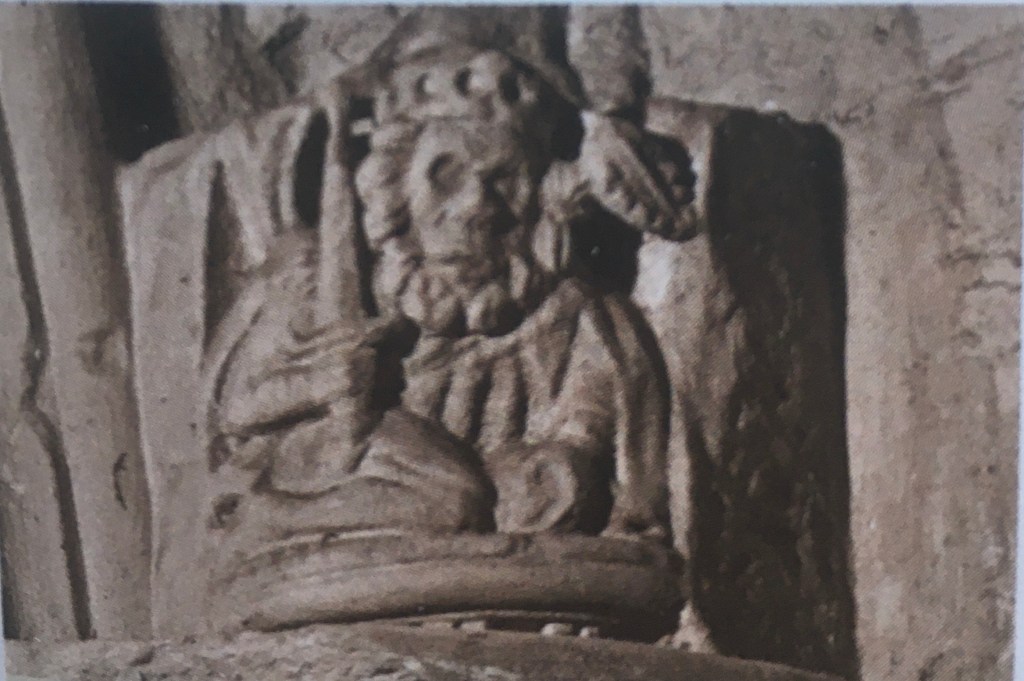
Right-William the Founder-This carving in thought to be of the founder of the Chapel, William St Clair. He began building the chapel in 1446 but died in 1484 before it was complete. ~Rosslyn Chapel brochure~
William St Clair brought artisans from “other regions and foreign kingdoms” to take part in the construction of Rosslyn Chapel. Here are a few examples of plants that are not native to Scotland.
Left-Aloe Vera-which grows in hot, dry places such as India and North Africa.
Center-Indian Corn-this carving is thought to be maize which grows in North America. Considering the chapel was begun in 1446, and the explorer, Christopher Columbus did not discover the New World until 1492, it is amazing that this plant made it onto the walls of Rosslyn Chapel.
Right-Trillium-Another exotic plant carved into the Chapel. It grows in North America and Asia.
The Knights Templar Connection
Although Rosslyn Chapel plays a role in Dan Brown’s book The DaVinci Code, some historians claim that there really are no connections with the Knights Templar to Rosslyn Chapel. The chapel was not built by the Knights Templar and although many of the men in the St. Clair family were known to be knights, they were not Templar Knights. According to Rosslyn historian, Michael Turnbull, Templar Knights took a vow of poverty, chastity, and loyalty to their order. The St. Clair family knights were men of wealth, married and had children and were loyal to their king.
The St. Clair family had roots that grew deep in religious and royal loyalty. Several of Sir William’s ancestors were friends of Robert the Bruce. Two of his ancestors, brothers by the names of William and John were chosen to accompany Sir Robert Douglas to carry the heart of Bruce to Jerusalem. All three of these men were killed in one final service to their dead king. (You can read more about that story here.) Robert the Bruce was said to have been aided by the Knights Templar during the Battle of Bannockburn. Since the St. Clair family were closely associated with Bruce, some historians believe there has been some confusion pertaining to the St. Clair family and the Knights Templar.
Although the Knights Templar were disbanded over 100 years earlier, other researchers tend to believe that the four altars on the east wall of the Lady Chapel are a symbolic reference to the four final Templars who had been tried after the dissolution of the Knights Templar. They would be Jacques de Molay (Grand Master of the Order), Geoffrey de Charney (Grand Commander of Normandy), Geoffrey of Goneville (Grand Commander of Aquitaine, & Poitou), and Hugh Peraud (Grand Commander of the Isle de France). Just as one of the altars is elevated higher than the other three, could these altars represent the four Tempars, one (the Grand Master) ranked higher than the other three (Grand Commanders)? The details behind this connection are too in depth to go into here, therefore I will leave that to the reader to take on further research on the subject. (http://www.masonicsourcebook.com/rosslyn_chapel_freemasonry.htm)
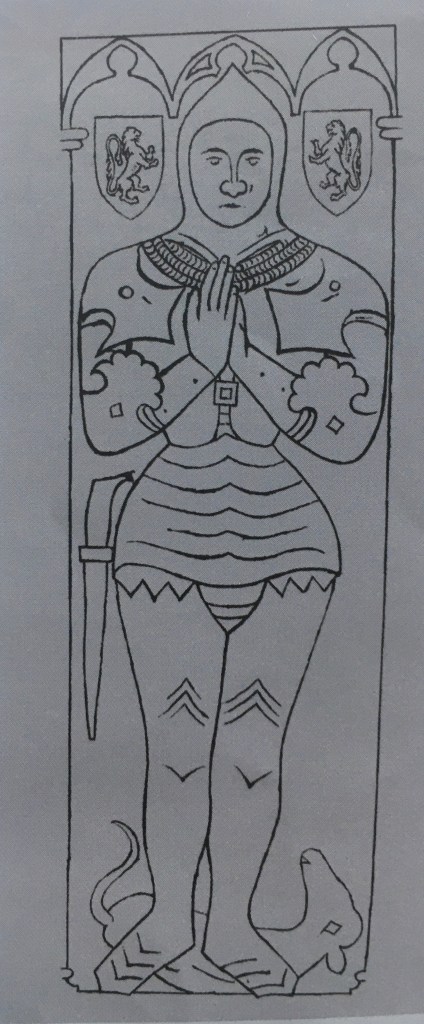
Knight with dog This knight etched into the stone floor slab could represent Sir Alexander Sutherland, father-in-law of William St Clair who founded Rosslyn Chapel.
The Freemason Connection
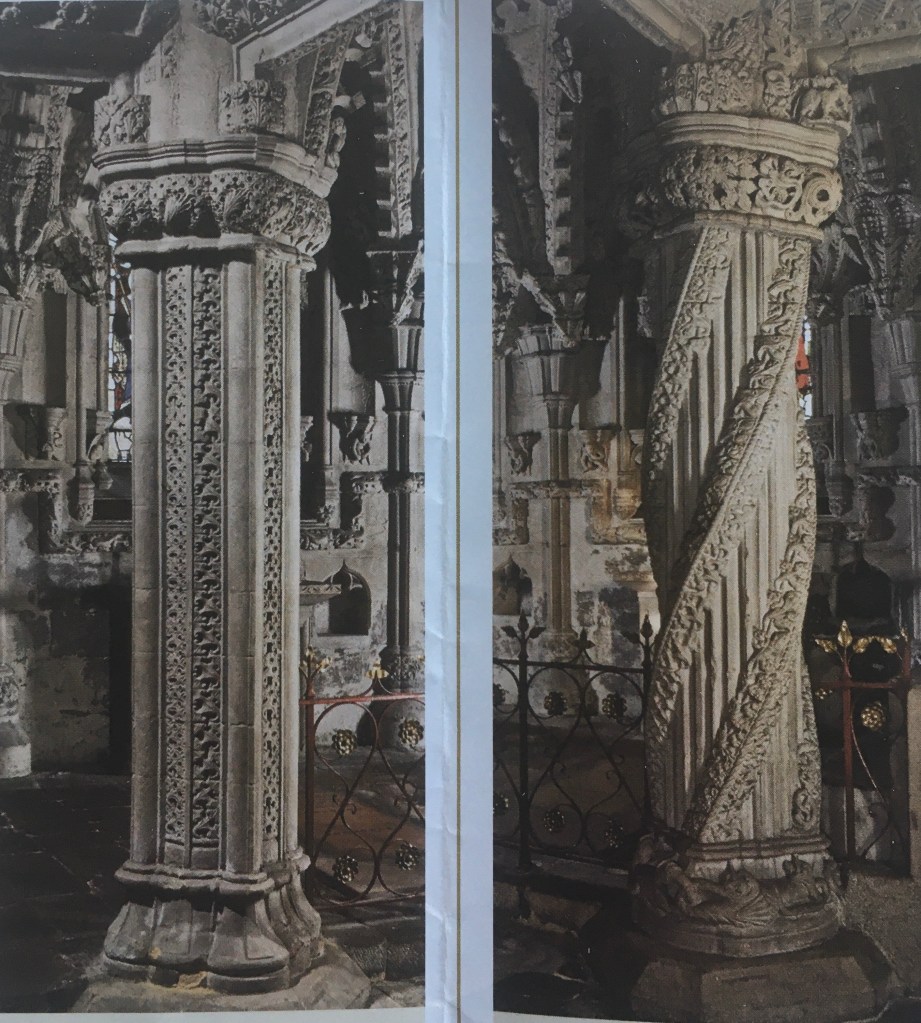
It is a common belief that with the abolishment of the Knights Templar came the birth of the Freemasons. In keeping with the Templar/Freemason connection there is one very intriguing story about the Rosslyn stonework which pertains to two intricately carved columns within the chapel. These are known as the Mason’s Pillar and the Apprentice Pillar. Legend says that while the master mason was away researching the design that had been requested for the pillar, his apprentice had a dream in which it was revealed to him what the design of the pillar should be. Upon the master’s return, he found that his apprentice had finished the beautiful carving of the pillar. In a fit of jealousy, the master flew into a rage and struck the apprentice over the head with a hammer, killing him.
Both men are forever commemorated within the walls of the chapel. One head carved into the stone with a gash on its forehead, looking across the way at another, the head of his master and killer.
This story closely resembles the murder of Hiram Abif, the master mason involved in the building of Solomon’s Temple. The Freemasons, who have ties with these ancient stonemasons view this event as symbolic and tie them to the construction of Rosslyn Chapel.
Left-Mason’s Pillar, Right-Apprentice Pillar
According to Freemason historian and scholar, Dr. Albert Mackie, Sir William St. Clair, the Earl of Orkney and Caithness was appointed the title of Patron and Protector of the Freemasons of Scotland in 1441 by King James II. This became a hereditary title that would be passed down through the St. Clair generations. However, when King James VI failed to exercise his prerogative of nominating office-bearers, the Freemasons found themselves without a Protector. Therefore, the Freemasons themselves appointed William St. Clair of Roslin (too many Williamses! Lol) as their Protector around 1600. Then, in 1630, a second charter was granted, giving William’s son, Sir William St. Clair the same power his father had been given. He was given the title the first Grand Master of the Grand Lodge of Scotland. St. Clair assumed the administrative role and the office continued to be passed down for more than 100 years, until the final Saint Clair, recognizing he would have no heir, offered to let the office be appointed by election. (http://www.masonicdictionary.com/sinclair.html)
Some of the imagery carved into Rosslyn is said to
have hints of Masonic rites. However, in spite of the Freemasons’ claims on the
founder of Rosslyn Chapel, the New World Encyclopedia claims that the earliest records of Freemasonic lodges date back
only to the late sixteenth and early seventeenth centuries. (https://www.newworldencyclopedia.org/entry/Rosslyn_Chapel).
Thus, we are left to wonder if the images we see carved in stone were pieces to
a Masonic puzzle, or are people only seeing what they want to see?
The Heart of Inspiration
The setting of Rosslyn Chapel next to Roslin Glen, and the mere beauty of the intricate stonework, both inside and out, have cast Rosslyn Chapel into a rather romantic light. Its loveliness has been praised by author and painter alike, and many have found inspiration in its splendor.
Sir Walter Scott not only wrote a poem of Rosslyn called The
Lay of the Last Minstrel, but he also drew inspiration for his Chapel of
the Hermit Engaddi in The Talisman, from the beautiful stonework of
Rosslyn Chapel.
Robert Burns, inspired by the reddish hues of the glowing sunrise hitting Rosslyn Chapel is said to have scratched the following poem, Epigram at Roslin Inn, onto a pewter plate at Roslin Inn afterward:
My blessings on ye, honest wife! I ne’er was here before; Ye’ve wealth o’ gear for spoon and knife- Heart could not wish for more. Heav’n keep you clear o’ sturt and strife, Till far ayont fourscore, And while I toddle on thro’ life, I’ll ne’er gae by your door!
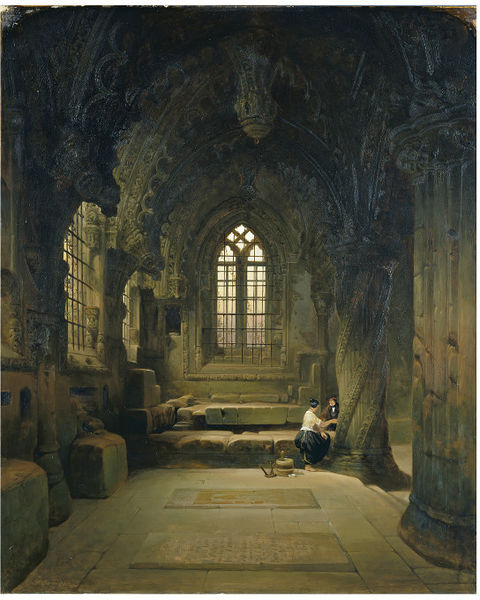
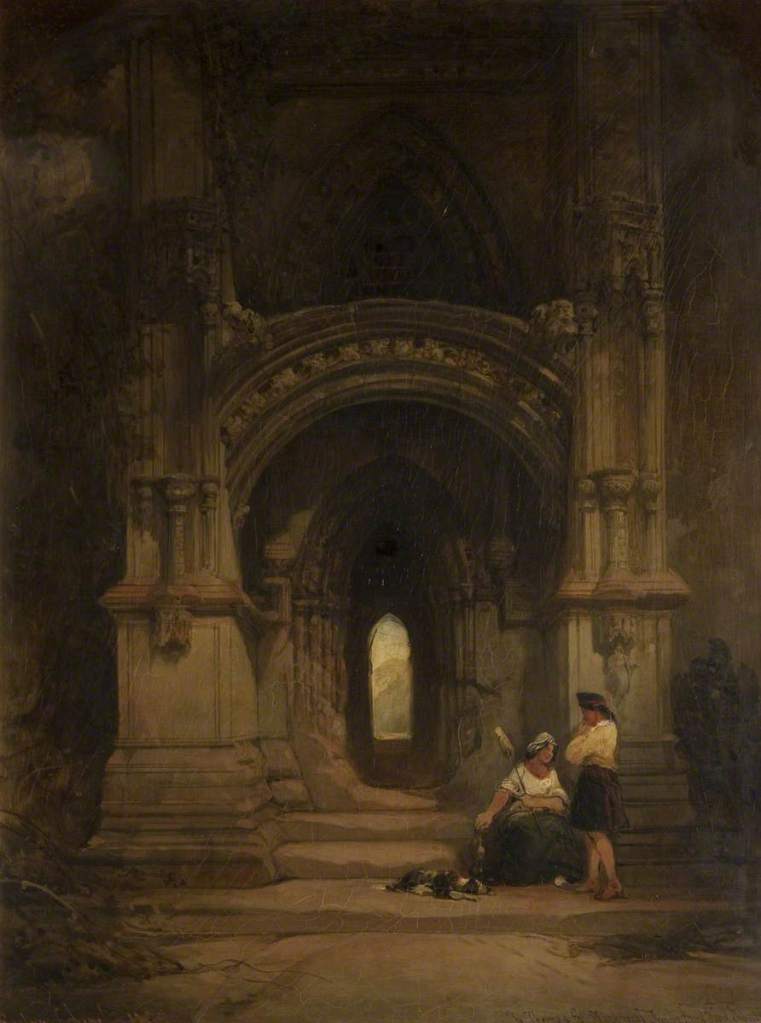
Painter David Roberts sketched and painted several works pertaining to Rosslyn Chapel. His artistry capures the intricacies of the carved stonework that make Rosslyn so special. Below are two of his three oil paintings honoring the Chapel.
Left-Entrance to the Crypt, 1843 ~Victoria and Albert Museum, London~ Right-Porch to Rosslyn Chapel, 1859 ~Blackburn Museum and Art Gallery~
Royal Intervention
Queen Victoria visited Rosslyn Chapel in 1842. When she saw the unkept condition and overgrown state of the chapel she expressed a desire to have the chapel reinstated to its former glory that it might be “preserved for the country.” Within 20 years the chapel had been restored and opened for worshipers, this time as an Episcopalian house of worship.
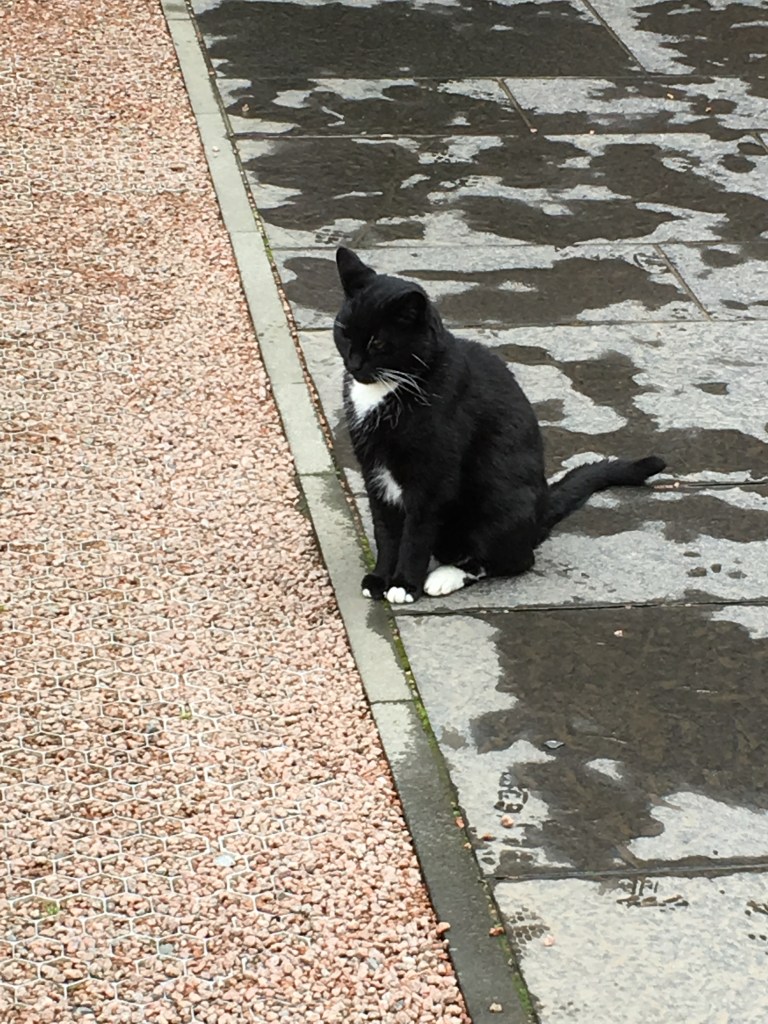
William the Cat (2017)-resident mouser. Locals claim he is the reincarnation of the original Sir William St Clair, come to watch over Rosslyn Chapel.
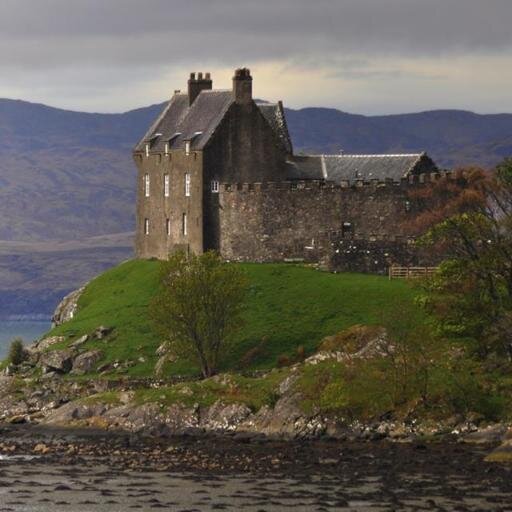
On the northern banks of Loch Crinan, in the western part of Scotland stands a picturesque little
castle named Duntrune. Built in the 12th century, it has withstood
the tumultuous history of Scotland to remain one of the best and longest
preserved castles that is still occupied in all of Scotland today.
Though Duntrune is a lovely
castle in a beautiful setting, it was an event that took place there in the mid
1600’s that first drew my attention to it.
Duntrune Castle
A Nasty Civil War
The backdrop of our little ghost story
is the English civil war that took place between King Charles I and his
disagreeing Parliament. Charles eventually dissolved Parliament and decided to
rule without them. This threw the country into a civil war that wasn’t
satisfied until Charles was dethroned and beheaded in 1649.
This is a very simplistic explanation
of events, for there were underlying causes that put the two ruling forces at
odds with each other. One of those causes was deeply rooted in religious disagreements.
At first, Scotland made an attempt to steer clear of the problems in England,
but it soon became apparent that they would eventually be dragged into the
quarrel.
Two Sides of the
Same War:
The English Civil
War was one component of a bigger war known as the Wars of the Three Kingdoms.
This not only involved the people of England, but Scotland and Ireland were
also thrust into the disputes between Charles and his Parliament.
At the heart of
the Scottish involvement in this war were the Covenanters and the Royalists.
The Covenanters had their roots in Presbyterianism, a movement that had shaken
Scotland over a hundred years earlier and had caused dissent between the
Catholic Scots and those who fought for reformation. The Covenanters were also known
as Parliamentarians, due to their support of Parliament over King Charles. The
other faction was the Royalists. They were also known as the King’s Scottish
army. They were loyal to the king and supported King Charles’ policies of
governance in England.
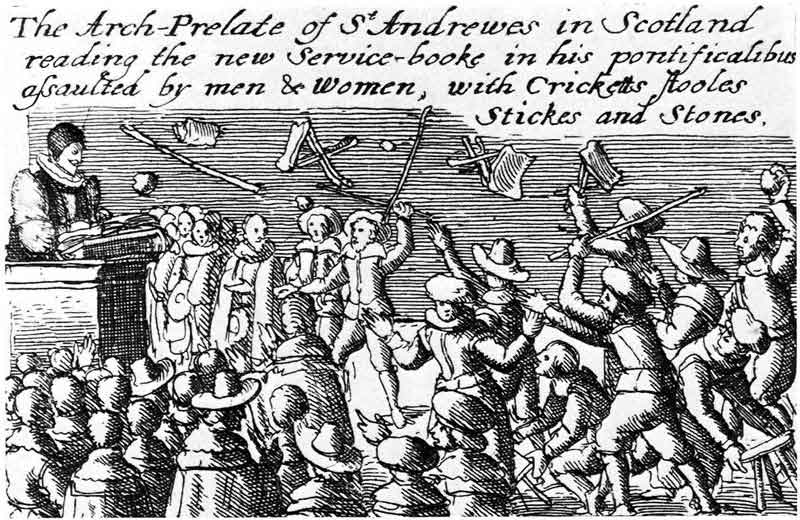
Riot Against Anglican Prayer Book, 1637. ~Wikimedia Commons “Riot sparked by Jenny Geddes over the imposition of Charles I’s Book of Common Prayer in Presbyterian Scotland. Civil disobedience soon turned into armed defiance.” Wikipedia
Enter: The
Highlanders
The diverse
clans of the Highlands were of differing opinions on Charles and his policies. This was due in part to the
many cultural and religious beliefs held by the disparate clans. When it came
time to choose sides, some clans followed King Charles (the Royalists), and
others joined the Covenanters who sided with Parliament.
Amongst these divided Highlanders were two clans that knew hundreds of years of quarreling. These were the infamous Campbells and the MacDonalds. The bad feelings between these two clans make the American Hatfield’s and McCoy’s feud look like a playground scuffle. Even to this day, you can still find places in Scotland that refuse to serve patrons who are in possession of a certain clan name of Campbell.
Historians
seem to think that a lot of the riff between the two clans has been blown out
of proportion. However, the fact still remains that in the mid-17th
century, when there were sides to be chosen, the Campbells and the MacDonalds
happened to find themselves on opposing sides of King Charles’ war. And this
was the heart of the problem concerning Duntrune Castle.
The Stuff of
Folklore
Several
versions this tale can be found. Here I will give the account that I first
heard. Readers may wish to do further reading and research and come across
another tale that you find more believable or fascinating.
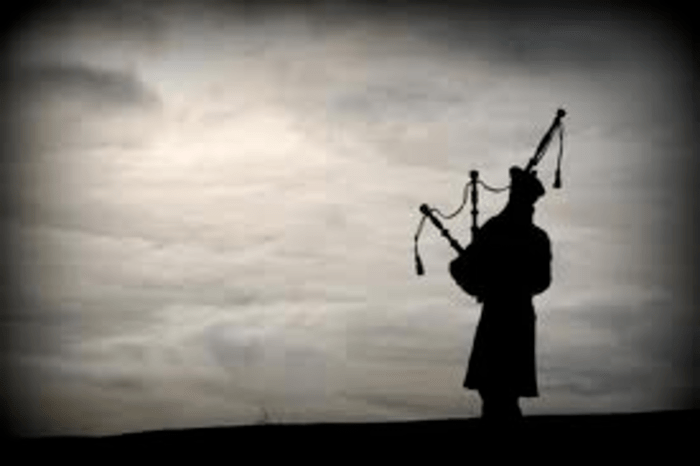
The MacDonald clan was led by a hulk of a man that came to be known by the name Colkitto. He was a master at warfare and not only fought for his own clan but was also known to have assisted Clan MacIntyre of Glen Noe*. In thanks for his assistance, the MacIntyre chief gave Colkitto his favorite piper. He was to accompany Colkitto and the MacDonald warriors on their campaign.
And so it
was that when the MacDonald clan came upon Duntrune Castle in the middle of the
night, the MacIntyre piper was also there to take part in the action. The
control of the castle was wrestled from the Campbells and left in the capable
hands of a few of Colkitto’s men along with his prized piper. Colkitto himself boarded
a boat and set sail across the Sound of Jura to continue on his campaign,
leaving his men to hold down the fort until his return.
When the
Campbells launched a counter-attack to regain control of Duntrune, all of the warriors
of the MacDonald clan were killed, except for the piper. He alone was left,
with the intent that he would play his pipes and entertain the Campbell clan.
And that he
did, until one day Colkitto’s boat was spotted on the Sound. With permission, the
MacIntyre piper played a song that he had prepared in honor of his leader’s
return, “Piobaireachd-dhum- Naomhaid” or in English, “The Piper’s Warning
to His Master”. Soon the haunting notes drifted out across the water, reaching
Colkitto’s ears. But it didn’t take long for the great chieftain to notice
something odd about the melody. The piper had intentionally misplayed some of
the notes in an effort to send a warning message to Colkitto.
Colkitto,
understanding the piper’s intent, turned his boat around and never completed
his destination to Duntrune. When the Campbell clan realized what the piper had
done, they called for the piper’s punishment.
And what greater
punishment could there be, than to disable the man, preventing him from ever
being able to play the pipes again? The MacIntyre piper’s hands were cut off,
and he eventually bled to death from his injuries.
I’m not sure if this is the exact version of The Piper’s Warning to His Master that the MacIntyre piper played for Colkitto, but have a listen.
The “Ghost” Part
of This Little Story
So, what’s so ghostly about this sad story? For hundreds of years there have been stories of banging noises and flying objects heard and sighted at Duntrune Castle. There have even been reports of a mysterious sound of bagpipes playing on occasion. For many years people actually thought the story of the mutilated piper was just that—a story. But while a renovation project was underway at Duntrune in the late 1800’s, an Episcopalian dean reported that workers found the skeletal remains of a man. They unearthed the bones: skull, arms, legs, torso—everything was there—except for his hands. The remains were reburied outside of the castle walls in an unmarked grave. Later, another excavation uncovered the bones of two hands, without a body to go with it, buried under one of the rooms of the castle.
If you are ever
in Argyll, perhaps you can venture to see Duntrune Castle. See if you can spot
a lonely specter dutifully piping out his warning across the salty waters of Loch
Crinan. Oh, and let
me know how he does it without his hands.
*Originally mistakenly published as Glen Coe. Thanks to reader, Neill M., for correction.
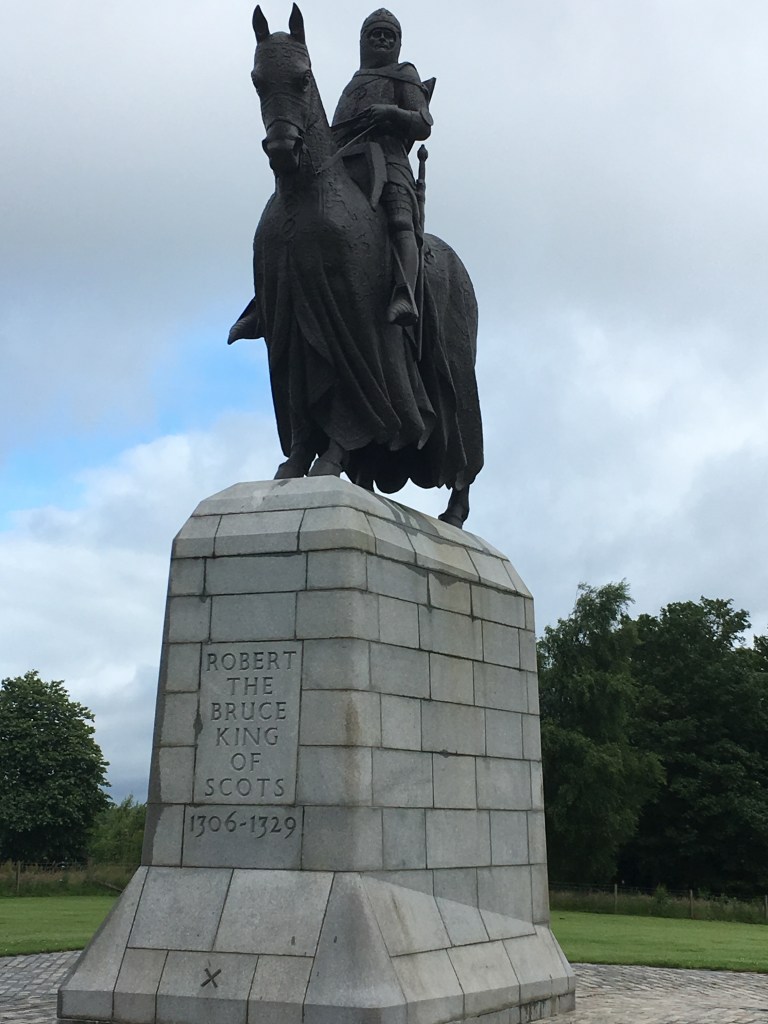
Robert the Bruce (also known as Robert I) is one of the most celebrated and respected kings of Scottish history. Even to this day, 700 years later, monuments and statues are still being erected in his honor, books are still written about him, and movies are still being made.
Monument to Robert the Bruce~Stirling, Scotland / photo: Tonya U. Brown, 2017
A Little Back History
In the late thirteenth century, Scotland was plunged into a period of political turmoil. The seven-year-old heir to the Scottish throne, Margaret, the Maid of Norway, had died before her coronation, leaving the throne empty and thirteen men vying for the position.
However, the
King of England, Edward I had other plans. He exerted a feudal superiority, treating
Scotland like a vassal of England. Edward appointed John de Balliol to take the
Scottish throne. John was heavily influenced by Edward, putting him out of
favor with the Scottish nobility.
The nobles deposed John and set up a council to rule instead. This, of course, angered Edward and goaded him to invade Scotland, starting the Wars for Scottish Independence. When Scotland was defeated in 1296, John abdicated, leaving Scotland without a king once more.
Enter Robert the Bruce
Robert was one of the many men who claimed a right to the Scottish throne. He was known to have led supporters of the rebel, William Wallace (of Braveheart fame) during the Wars for Scottish Independence. However, he was also known to be in good graces with the English king from time to time as well. But any goodwill that might have been shown to him by Edward came to an end in 1306, when Robert killed the cousin of the appointed Scottish king, John.
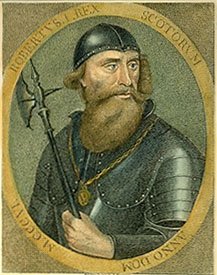
1797 painting of Robert the Bruce by unknown artist~The Granger Collection, New York
Questionable Actions
When Robert’s loyalty to Edward was called into question, he went right to the traitorous source: the cousin of John de Balliol, John (“The Red”) Comyn. Adamant opposer to English Rule, and another rightful heir to the Scottish throne, Comyn may have tired of Robert’s vacillations between English rule and Scottish rights. He met with Robert at a church at Dumfries on February 10, 1306. An argument broke out when Robert confronted Comyn on his reports to King Edward about Robert’s possible betrayal.
Here is
where history gets a little cloudy. Some say Robert met John Comyn with all
intentions of killing him. Other historians think that an argument broke out,
and in a fit of passion Bruce struck Comyn, taking him down. When he asked after
Comyn’s wellbeing afterward, one of Bruce’s supporters decided to take it upon
himself to make sure the job was done.
The difference in that time period is comparable to our current U.S. laws differentiating between murder and manslaughter. Was it cold-blooded premeditated murder, or a hot-blooded lashing out that resulted in someone’s death? Opinions vary and depending on which way you look at it could determine Robert’s popularity among the people, or lack thereof.
Either way,
one thing remained: he had taken someone’s life within the walls of a holy sanctuary.
This caused him to be excommunicated from the church and may have tormented
Robert for the rest of his life.
Death of a
Warrior
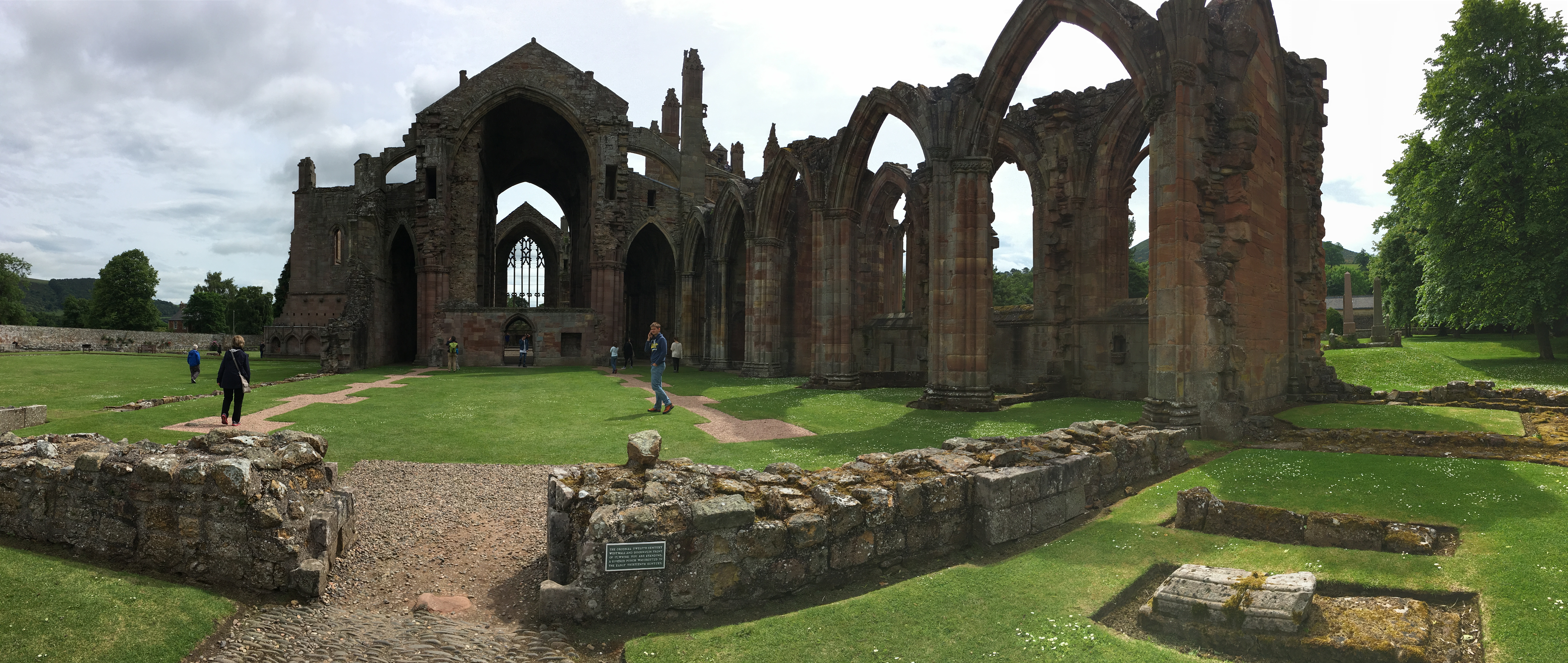
Many years later, the man who is most famous for breaking the English hold over Scotland at the Battle of Bannockburn, died at the Manor of Cardross, near Dumbarton. His body was buried in the Dumfermline Abbey, but his sternum was cut open and his heart removed so that it might be buried elsewhere. Some historians say that it was Robert’s one unfulfilled wish to go on a crusade. For this reason, his heart was put into a metal casket and borne about the neck of his close friend, Sir James Douglas as he set off for a crusade to Jerusalem. However, the crusade never came to fruition and instead Bruce’s men were sidetracked to Spain where Alfonso XI of Castile was instigating a campaign against the Moors of Granada. There, Douglas was killed, and Sir William Keith brought Robert’s heart back to Scotland. It was buried at Melrose Abbey, (a place repaired several times throughout Robert’s reign and with his funding), according to his wishes.
Other
tradition holds that Bruce wanted his heart to be buried at Jerusalem. The reason
for this wish could lead back to his excommunication from the church. Local
tradition believes that Robert the Bruce wanted his heart buried in Jerusalem
to atone for the sin of his murder of John Comyn at the Franciscan church 23
years earlier.
Whatever the reason, we know that his heart unfortunately did not make it to Jerusalem (unless you believe some conspiracy theories that hold that it was actually smuggled into Jerusalem hundreds of years later). However, what we do not know for sure is whether the small casket unearthed at Melrose Abbey in 1920, reburied, then unearthed again in 1996 are the actual remains of Robert the Bruce.
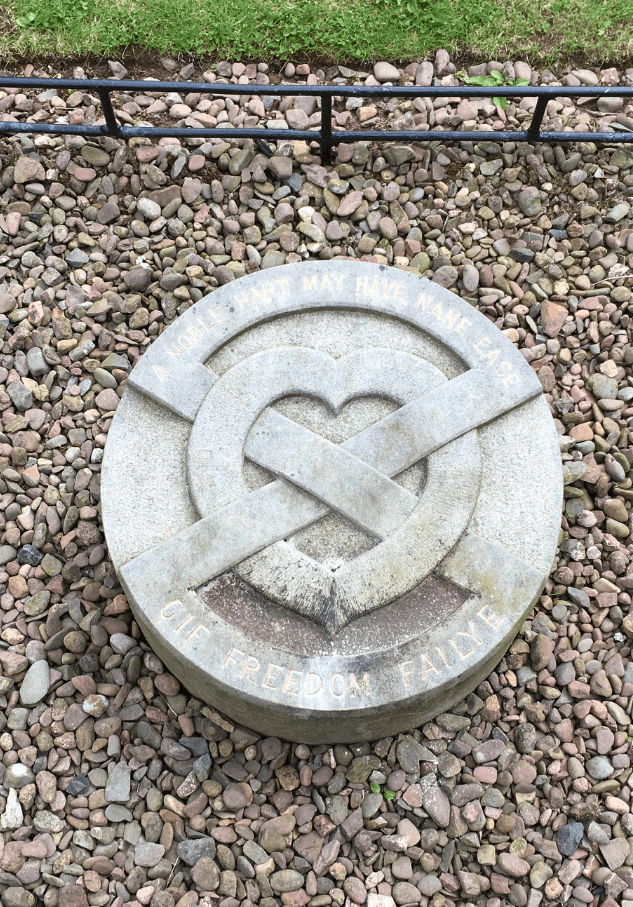
The heart was reburied again in 1998 and a marker has been set at the new burial place. For the most part people accept that it truly is Robert’s heart. Although it may have been Bruce’s wish to have his heart buried at Jerusalem, no one can deny that the rightful place for the heart of this beloved Scottish hero belongs in the soil of his hard-won land.
The heart of Robert the Bruce, buried at Melrose Abbey in Roxburghshire, Scotland / photo: Tonya U. Brown , 2017
The above inscription on the stone comes from a long, narrative poem by John Barbour called The Brus. It is a historic account of Robert the Bruce’s heroic deeds during the Scottish Wars for Independence. In Early Scots it reads: “A noble hart may have no ease, gif freedom failye” In English it is translated as: “A noble heart cannot be at peace if freedom is lacking”. Notice how the heart is entwined with the Saltire, the symbol used on the Scottish flag.
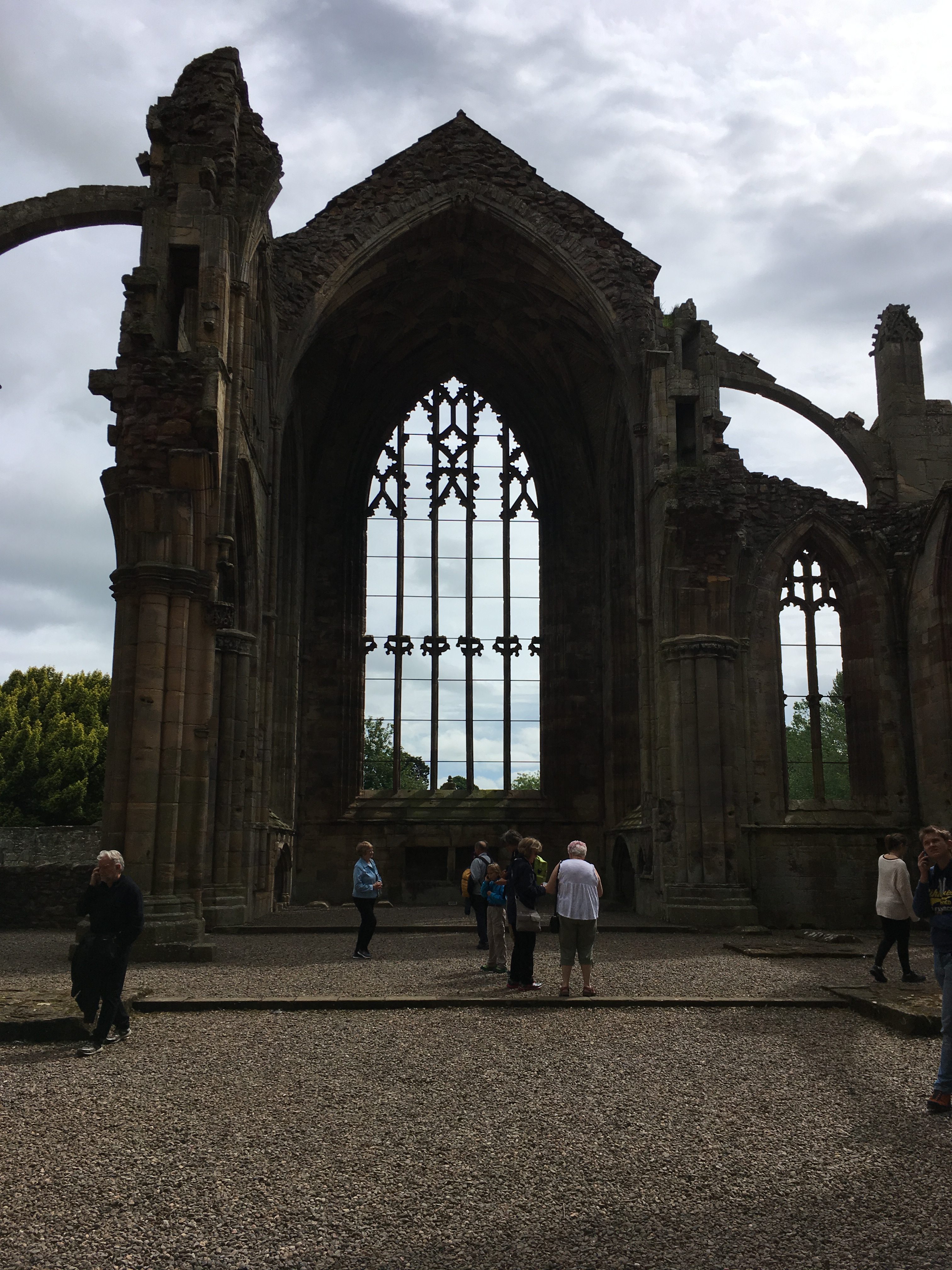
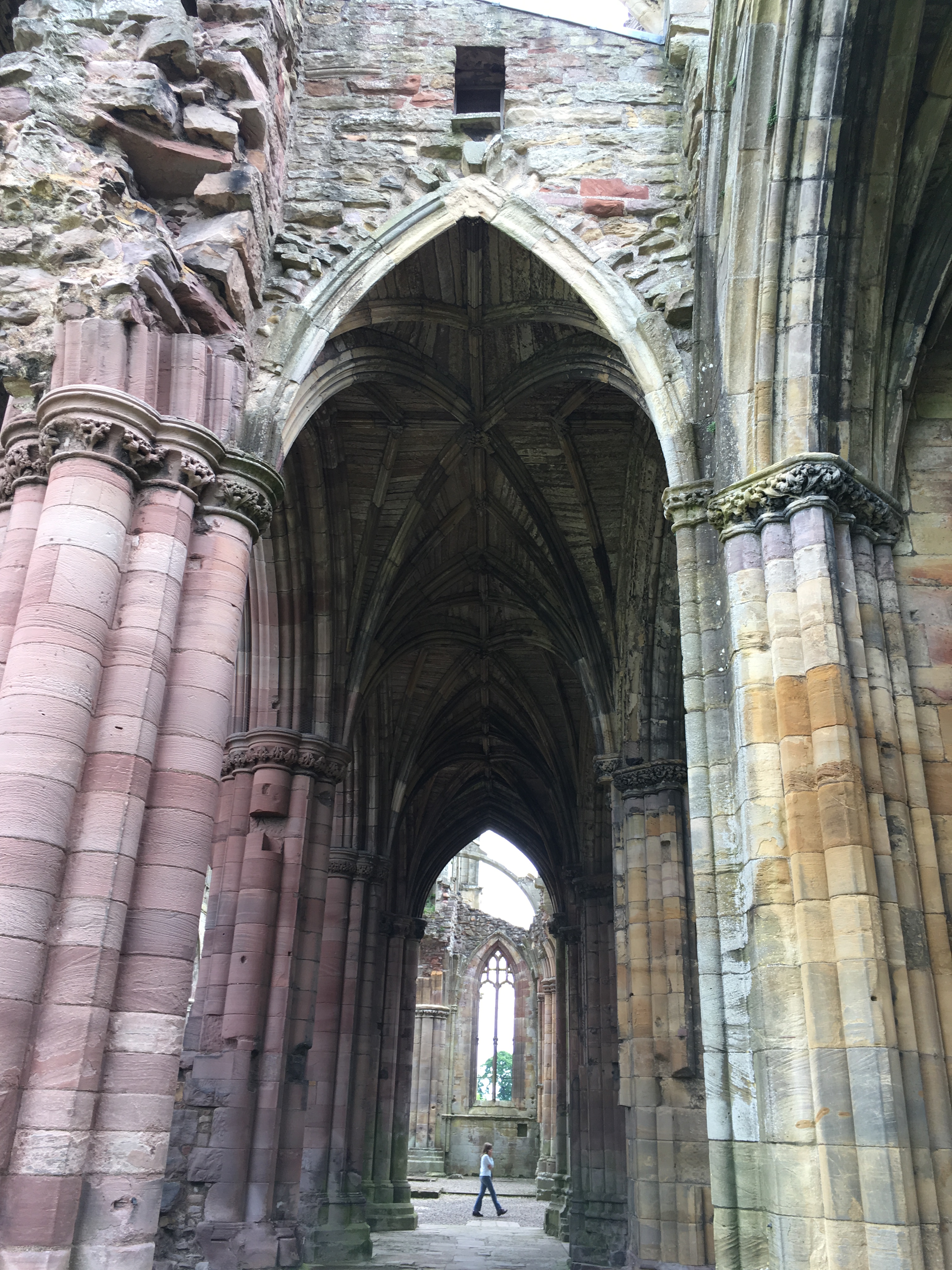
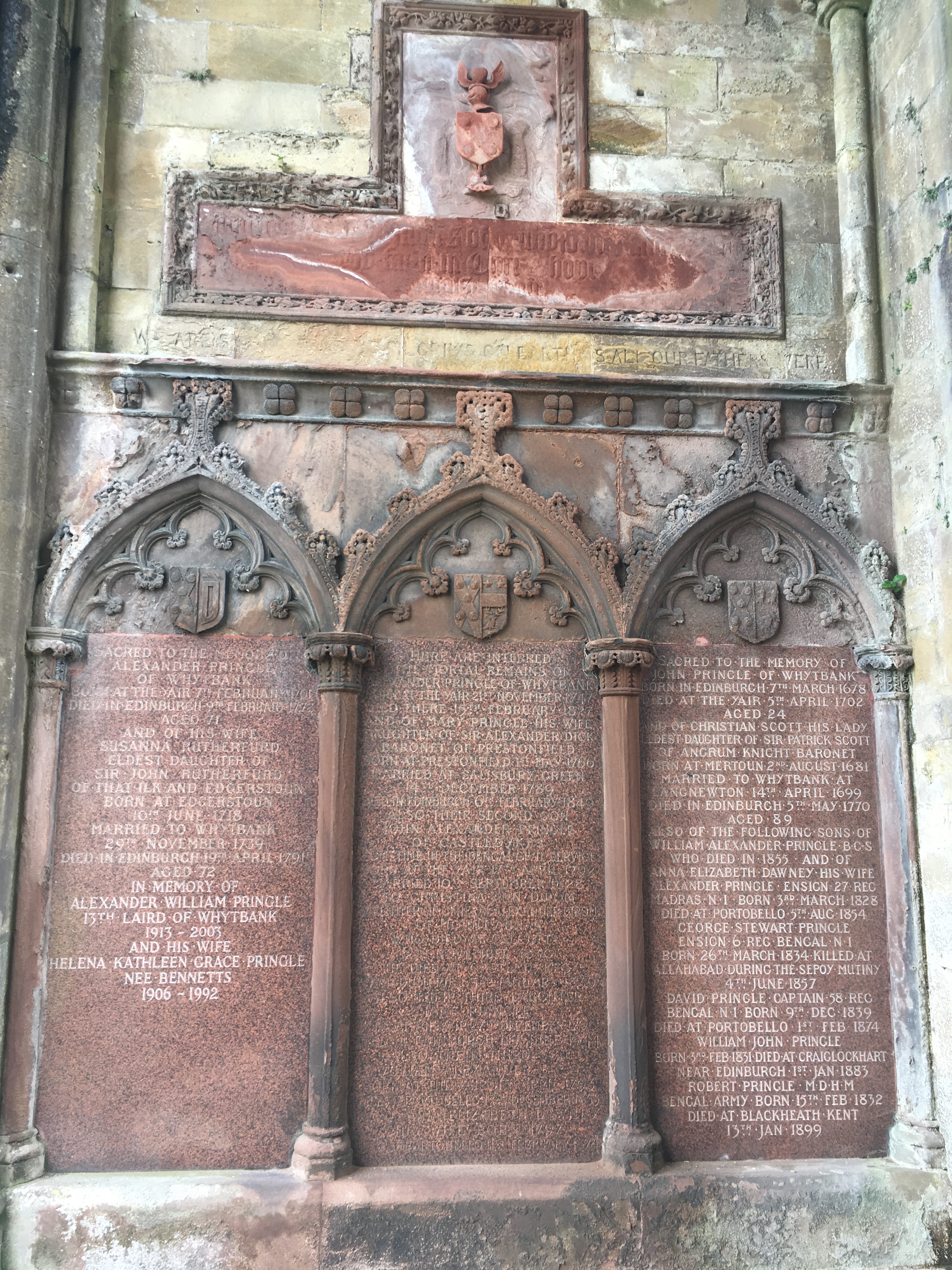
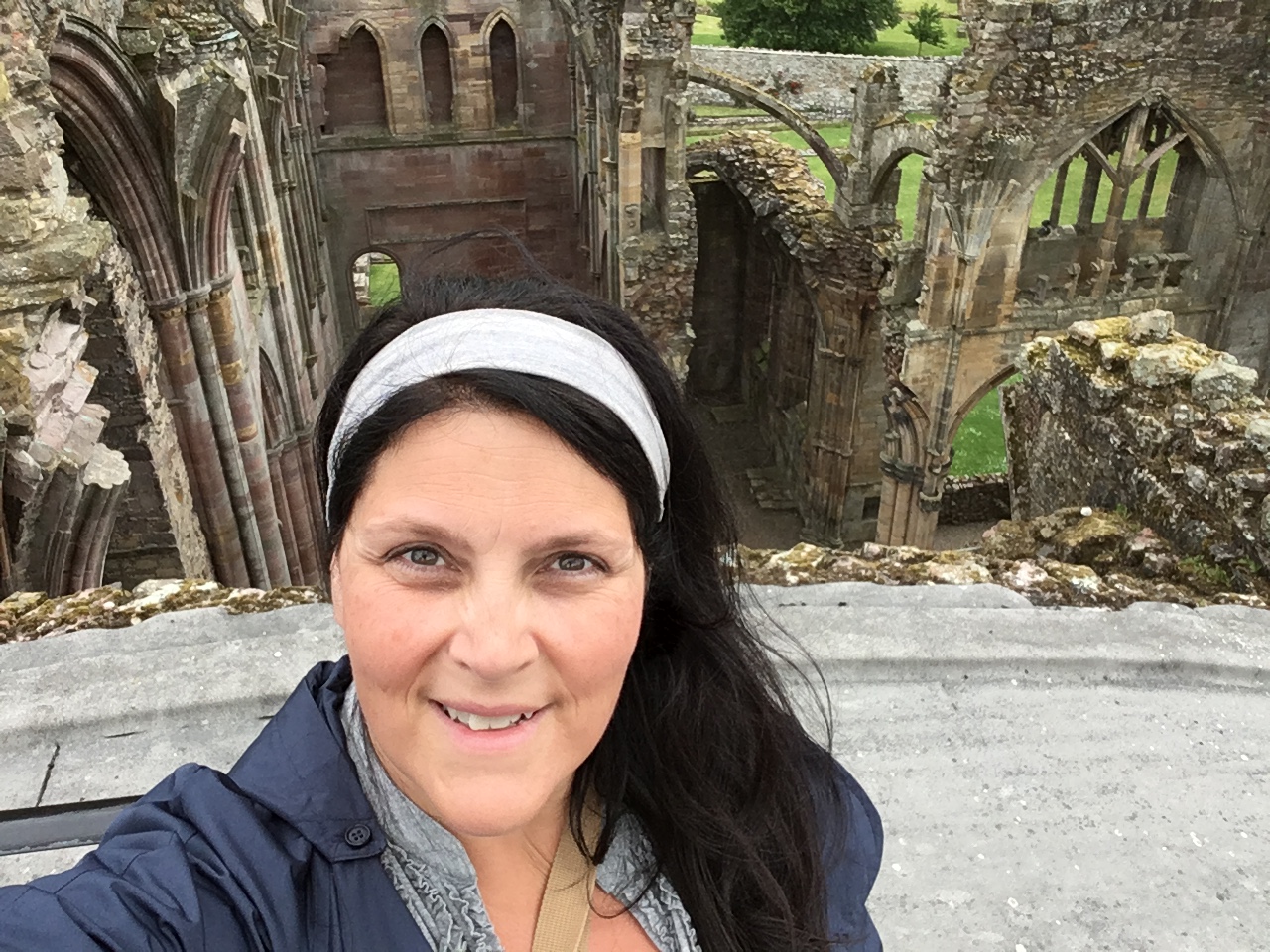
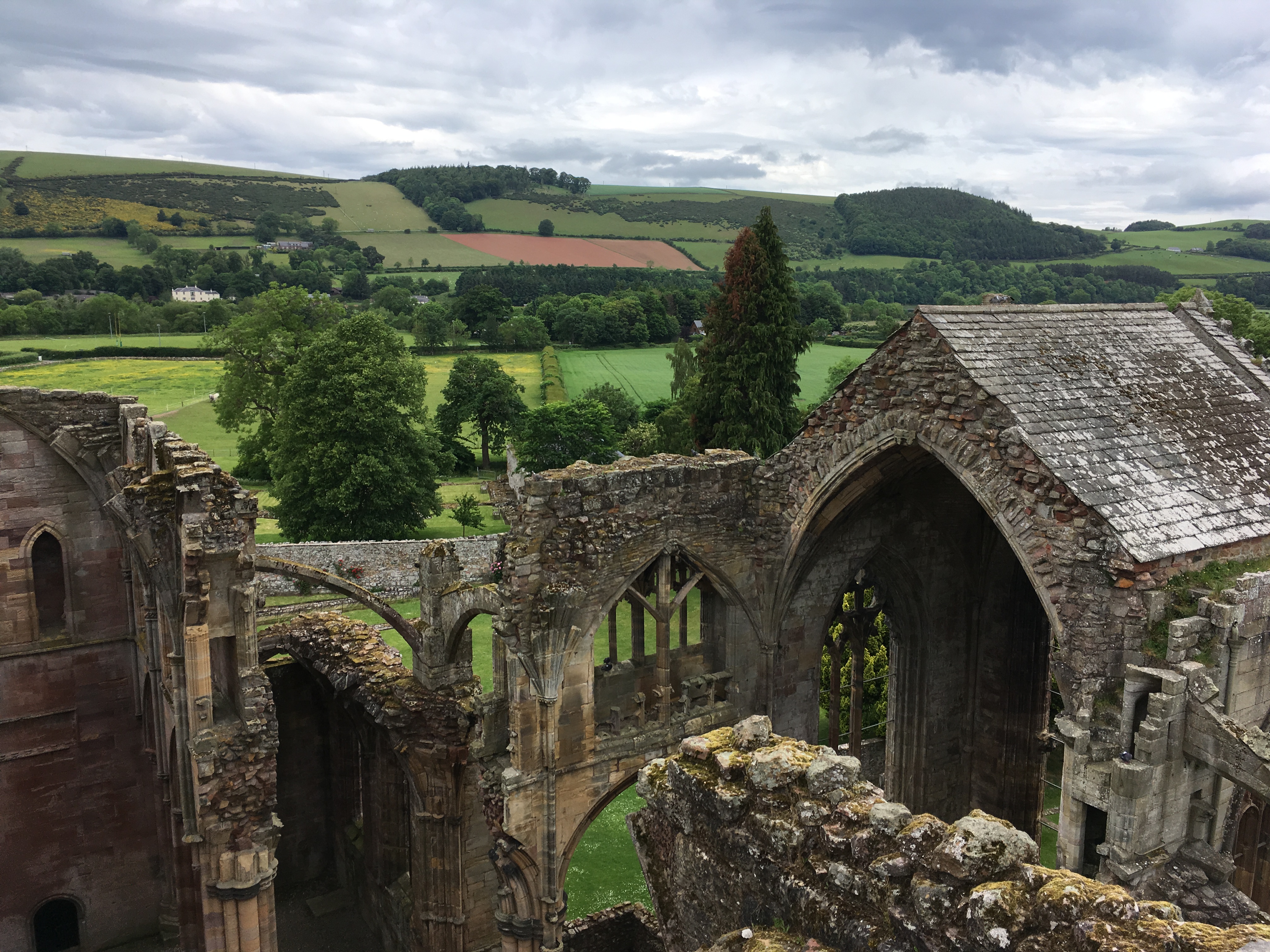
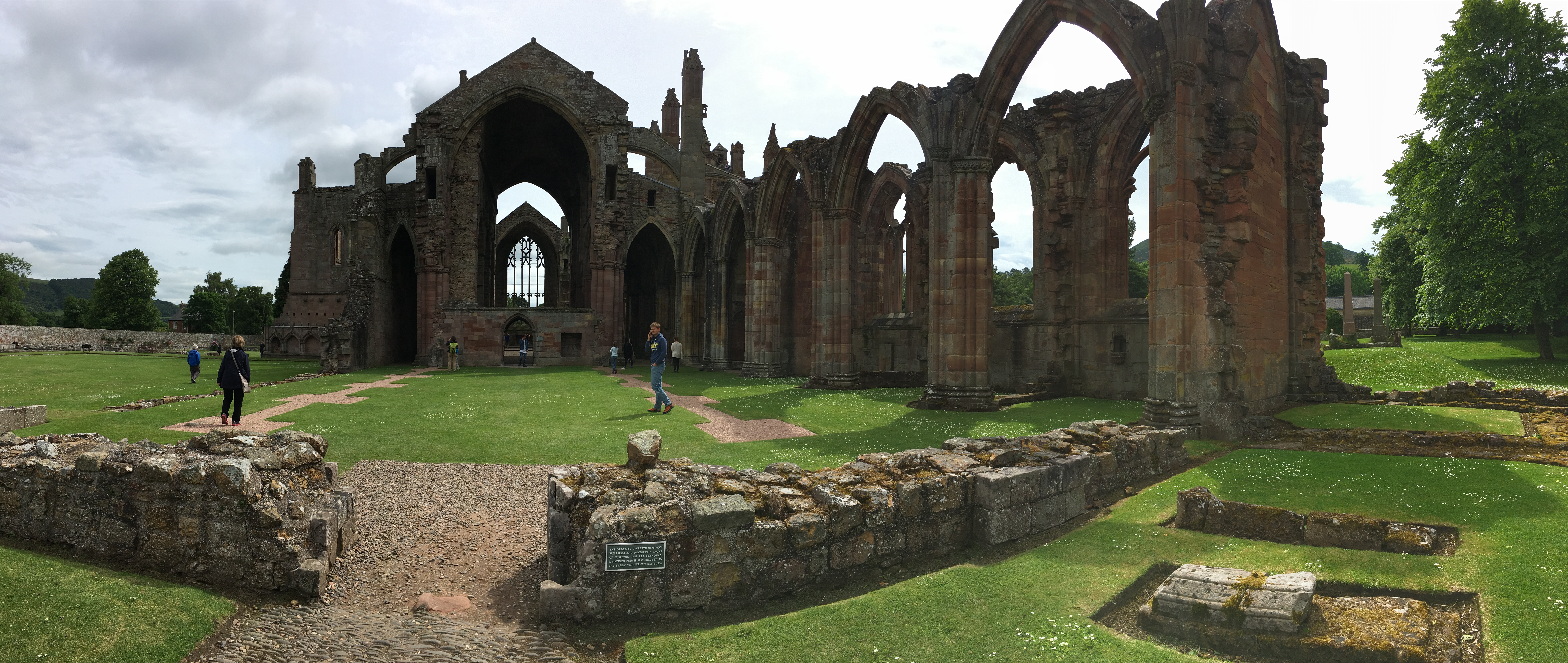
Here are a few more pictures I took at Melrose Abbey. You can click on the picture to open and expand for a bigger, better view. I hope you enjoy!
Scary climb to the top, but worth it for the view! Ahhhh!
Breathtaking
If Robert truly wanted his heart buried here, can you blame him?
I allow the use of my images in this way: Creative Commons License With Creative Commons you are free: To Share: Copy, Distribute, and Transmit the image Under these conditions: Attribution: Attribution to TonyaUBrown and theroseandthethistle.com must be made along with the image.
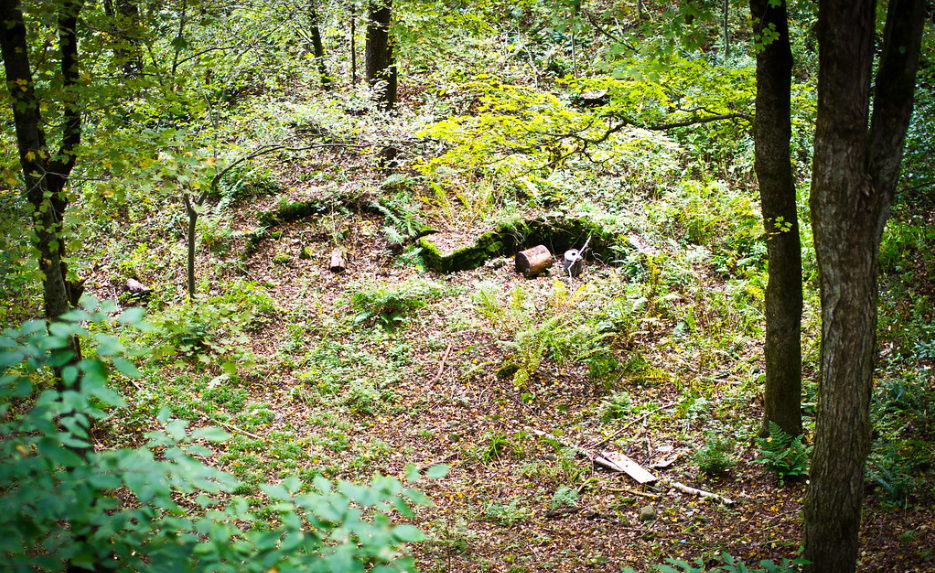
The one in Edinburgh, Scotland, right? Nope, the one in the secluded forests of the Catskill Mountains in the good ole U.S. of A.
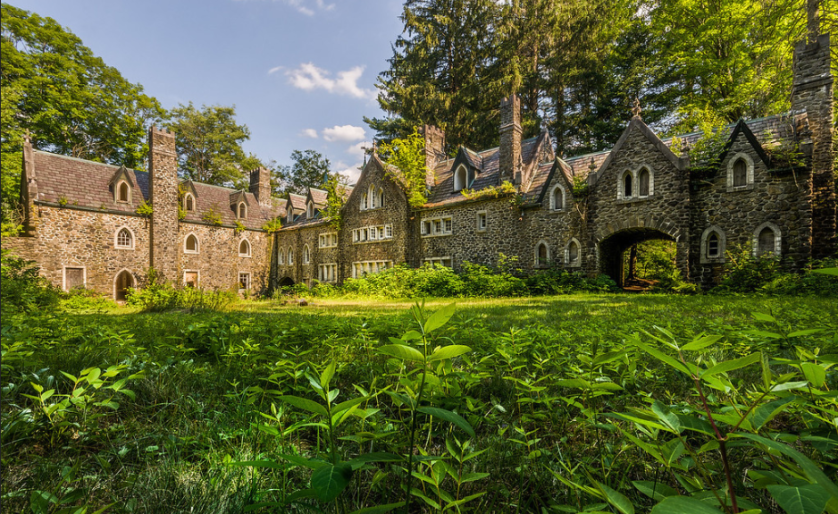
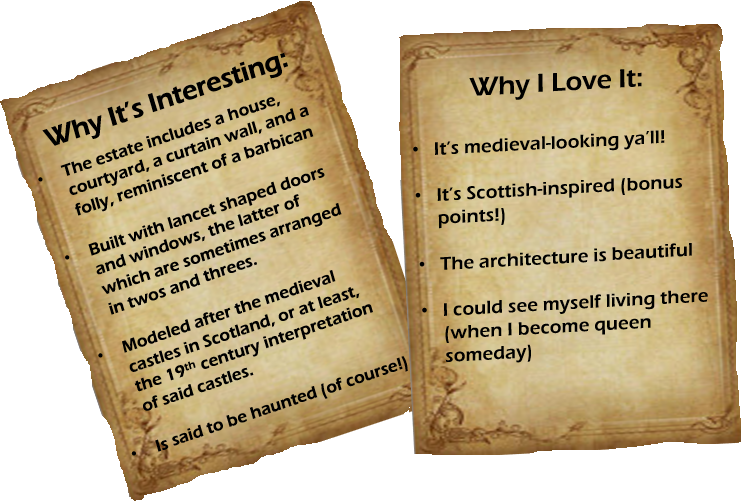
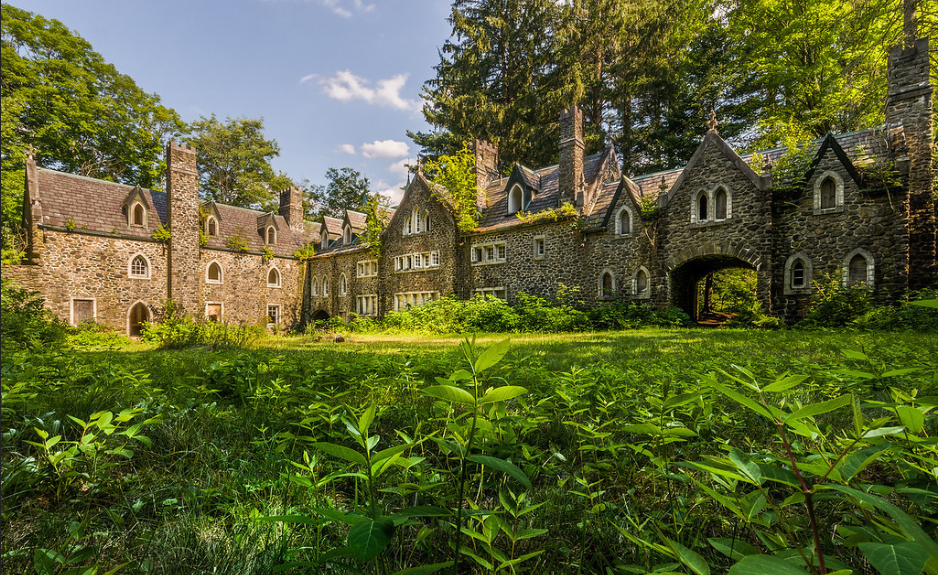
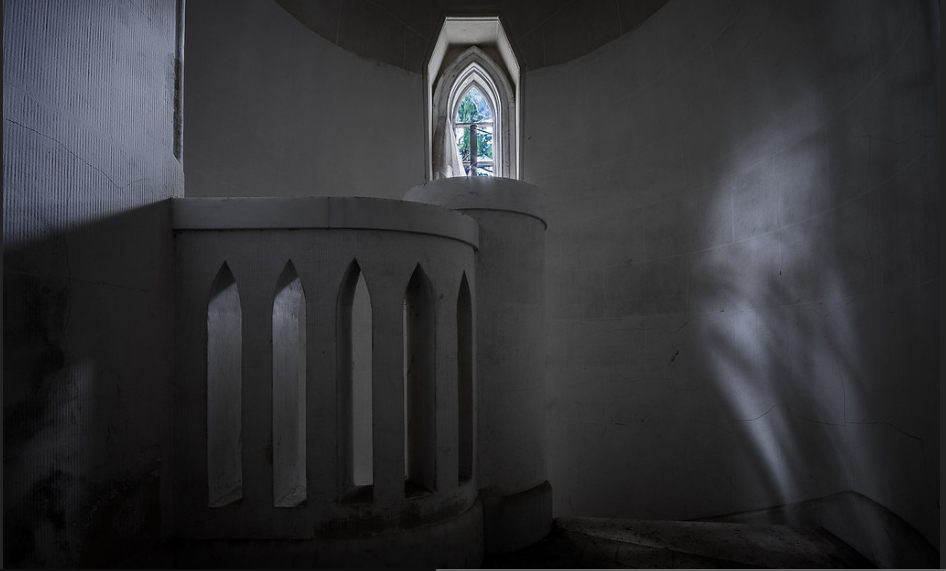
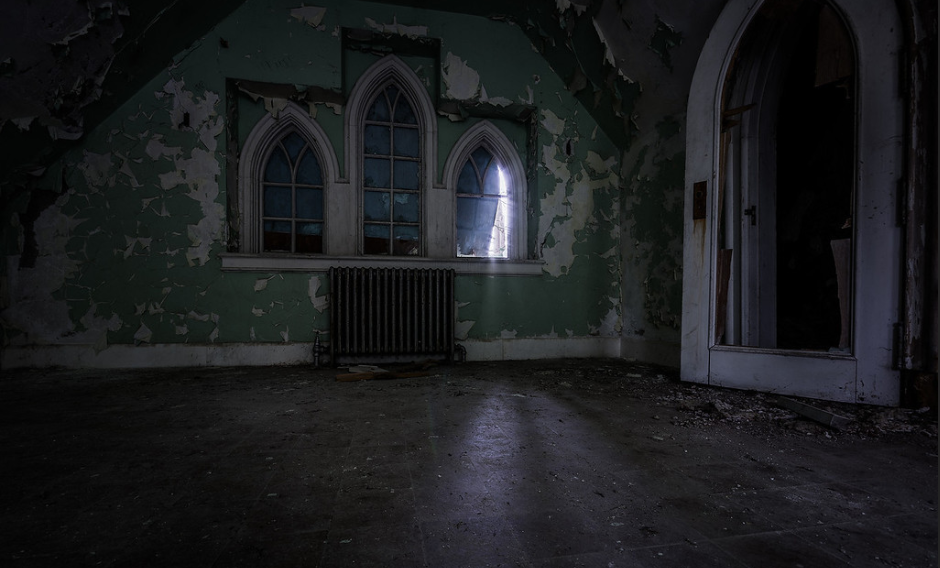
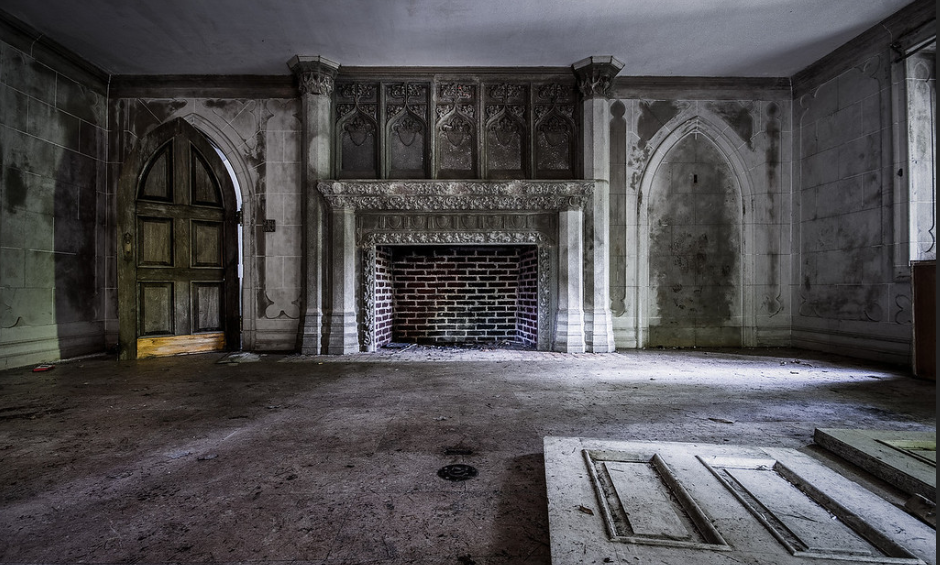
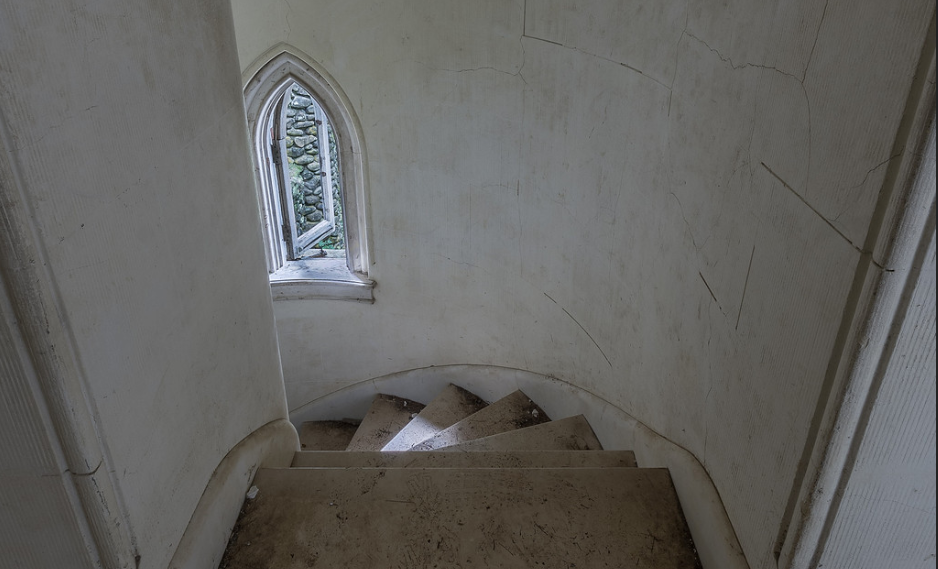
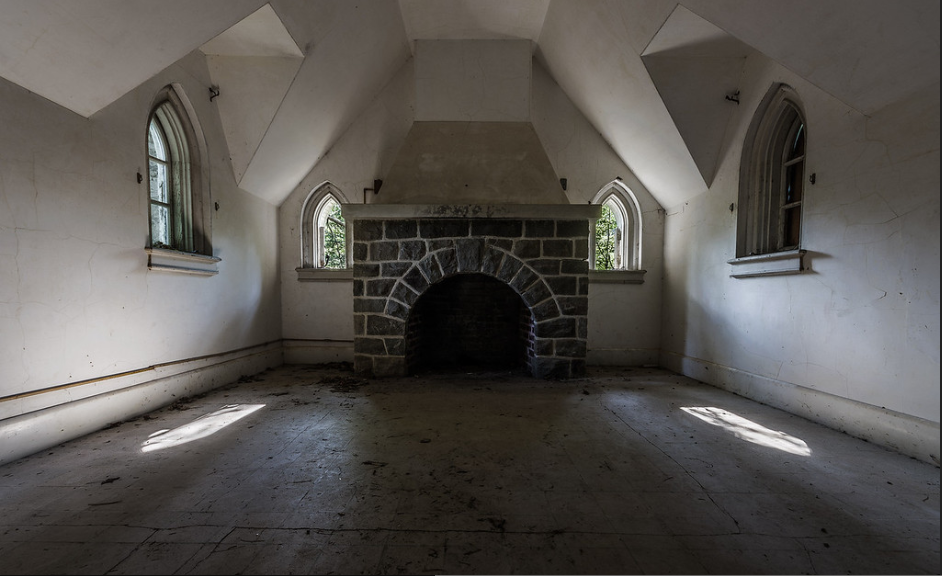
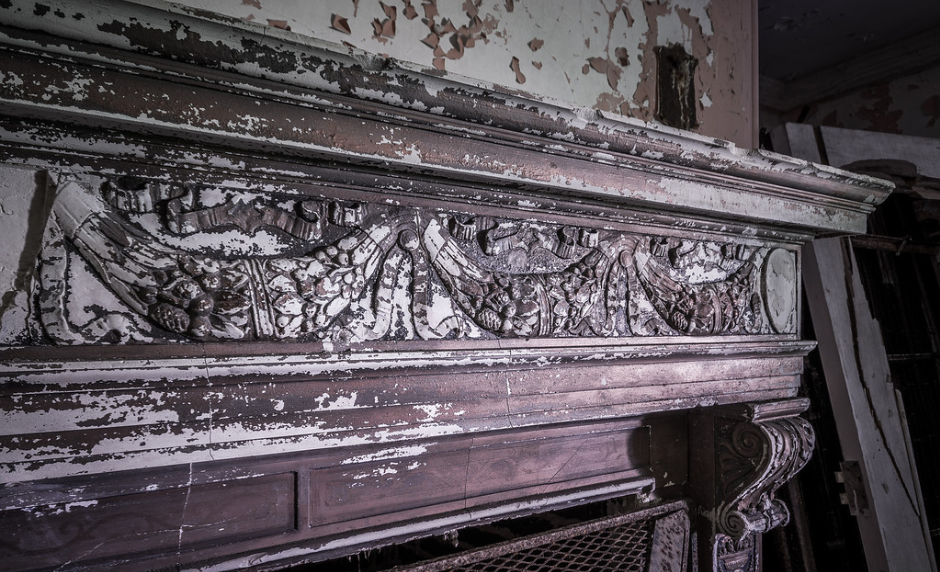
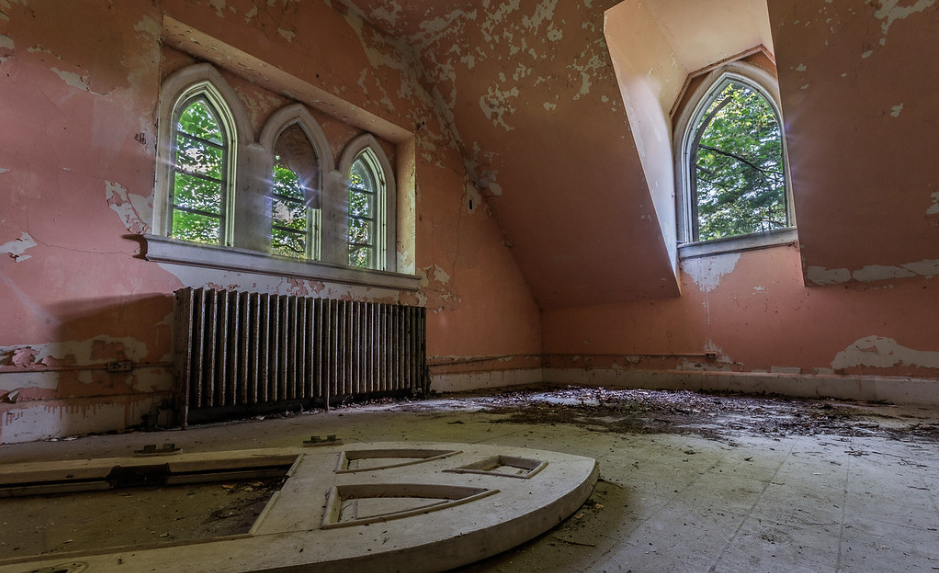
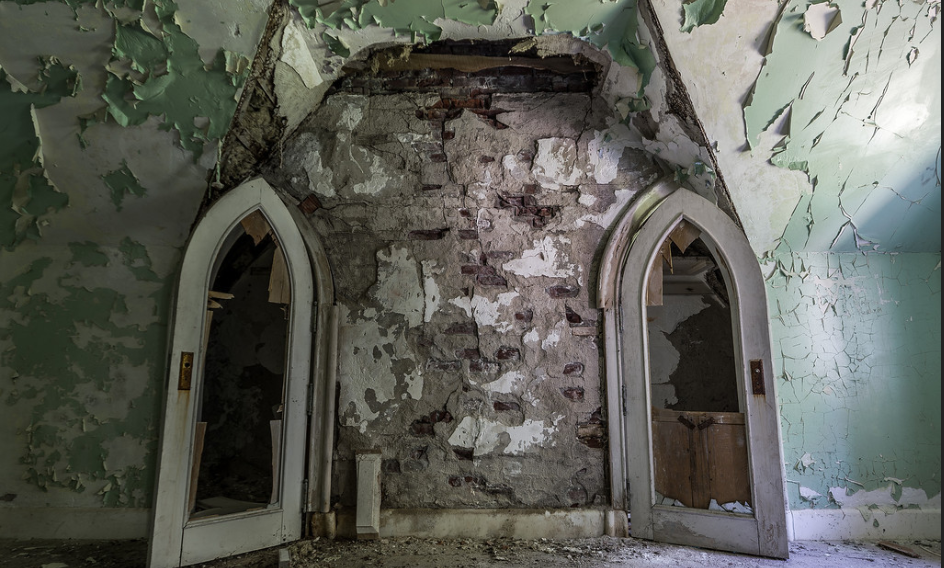
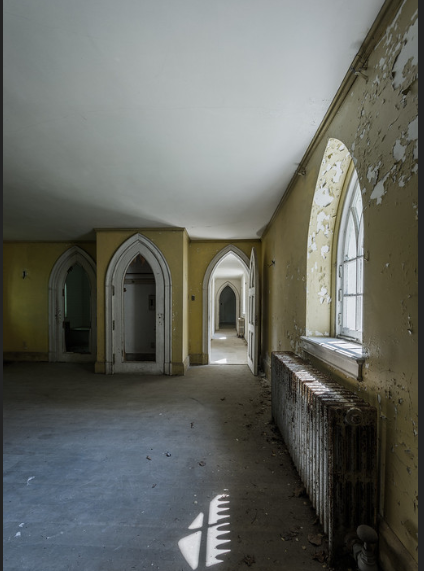
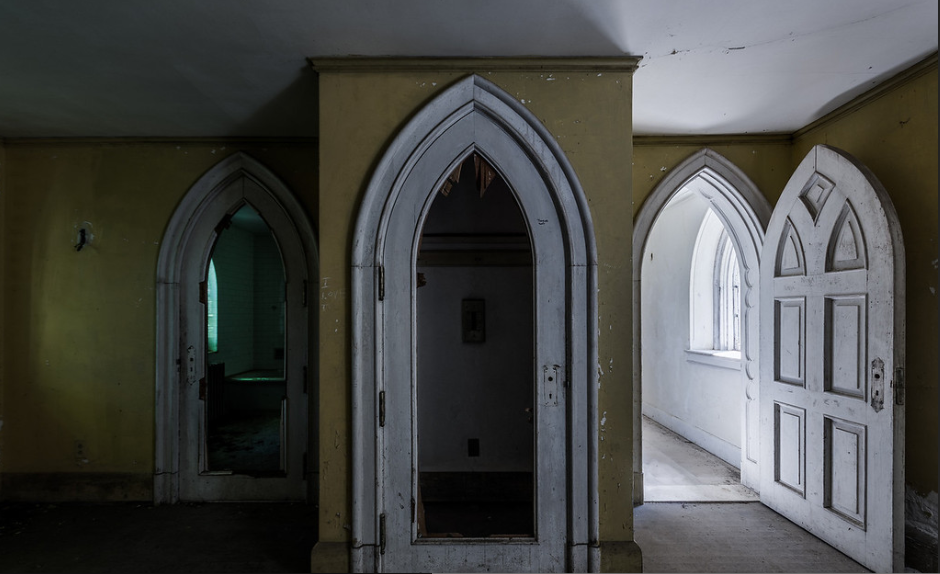
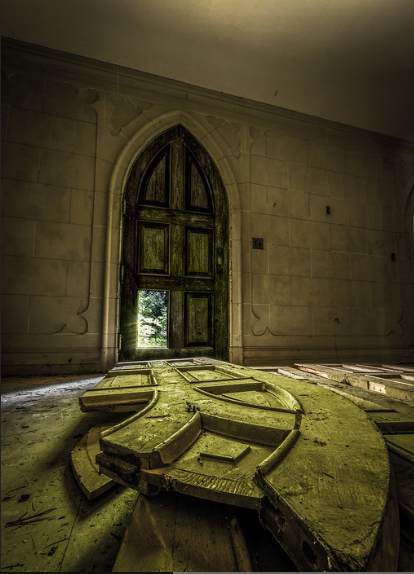
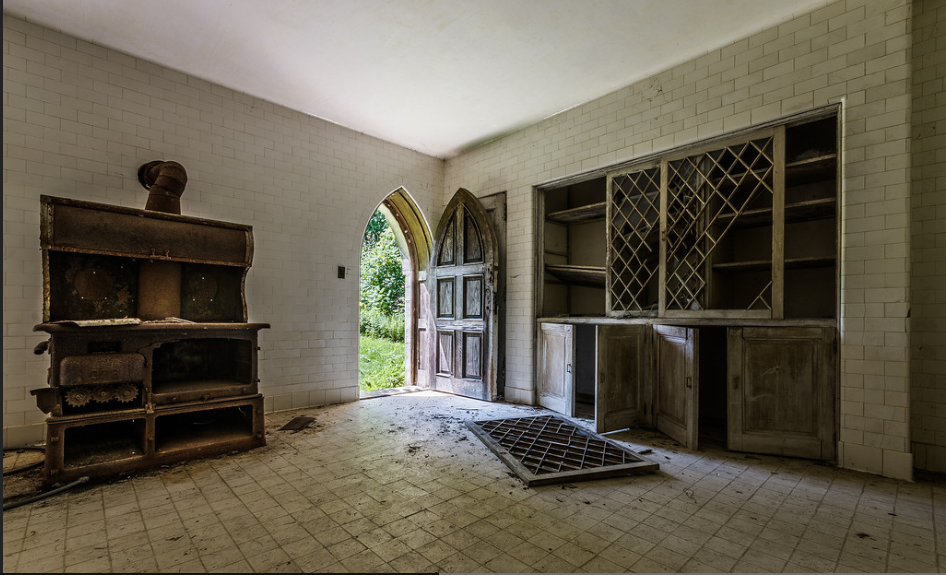
How odd (or maybe not, considering it’s me :P) that one of my first posts is not about Scotland, England, or even the sixteenth century for that matter. It is about a place that I have been obsessing about since seeing an abandoned house video on YouTube. The place is Dundas Castle in Roscoe, New York and although abandoned, it is hauntingly beautiful and still full of potential.
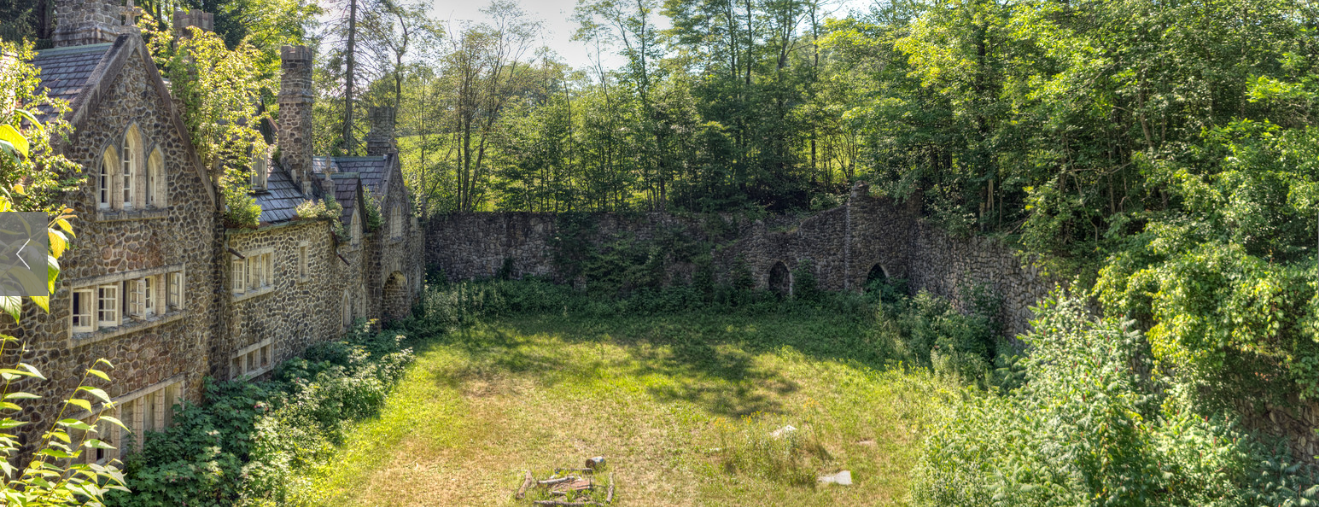
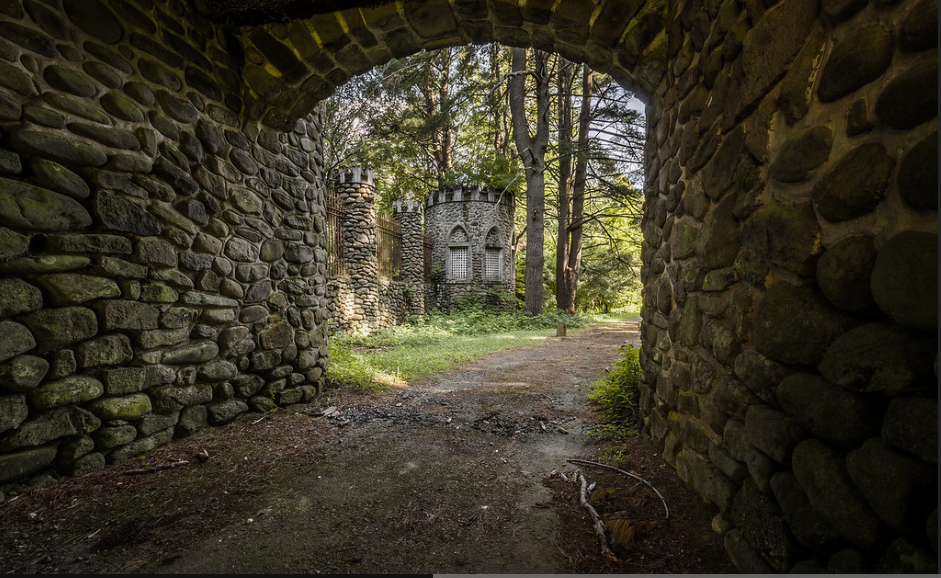
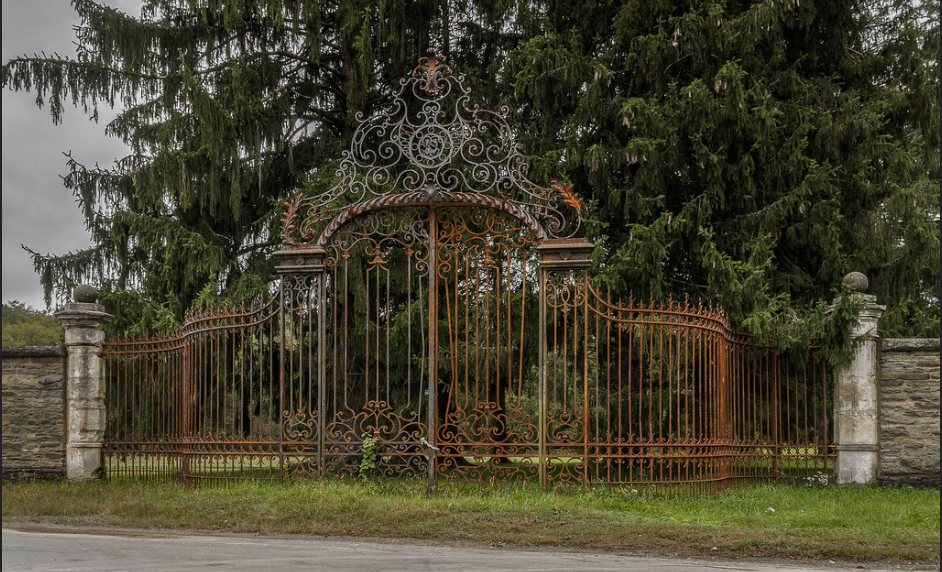
Shrouded in mystery, the original country house, called Craig-E-Clair, was expanded in 1915 with the beginning of the building of the castle now known as Dundas. Built on 964 acres, the massive estate has 40 rooms, and took the owner and originator of the idea, Ralph Wurts-Dundas, over eight years and more than a million dollars to construct.
Sadly, since it took over eight years to build, Mr. Wurts-Dundas did not live to see its completion. Ralph died in 1921, and construction stopped in 1924. The finishing touches were never added, and neither he nor his wife, Josephine, ever lived within its walls. Josephine had been committed to a sanatorium and upon her death, the castle passed to their only daughter, Muriel, who was a child at the time.
But the tragedy of Dundas Castle doesn’t end there. Muriel Wurts-Dundas, who had only visited the castle a handful of times, married James R. Herbert Boone and moved to England, where she too eventually was committed to a mental health institution. In her absence, Dundas had passed through the hands of several caretakers before being sold to the Prince Hall Grand Lodge of the Masonic Order in Manhattan.
Although Dundas Castle was used as a children’s summer camp for some time, no one has ever lived there, and it still stands empty to this day.
I just had an epiphany! My house is older than this one. It was built in 1890. Woohoo!
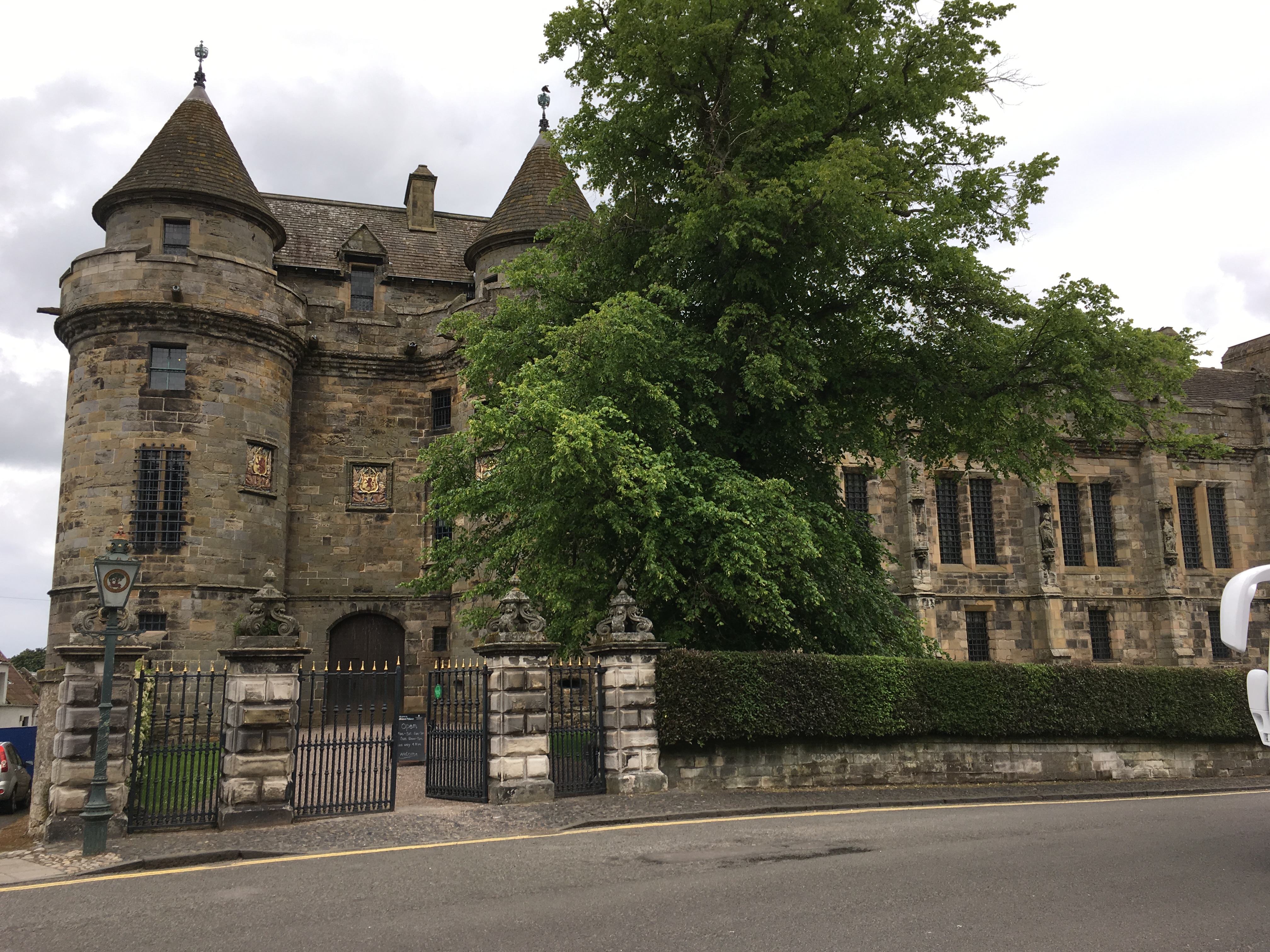
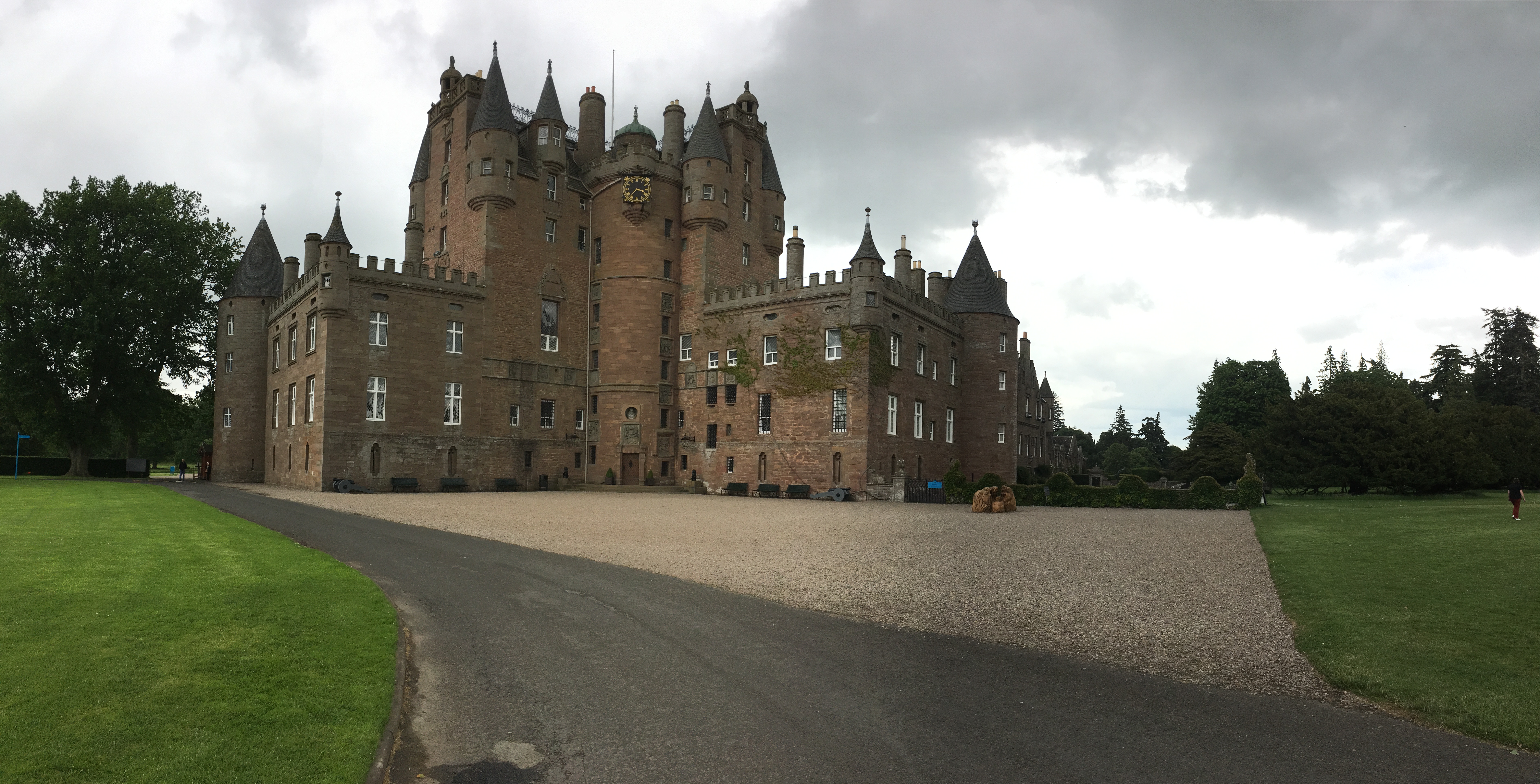
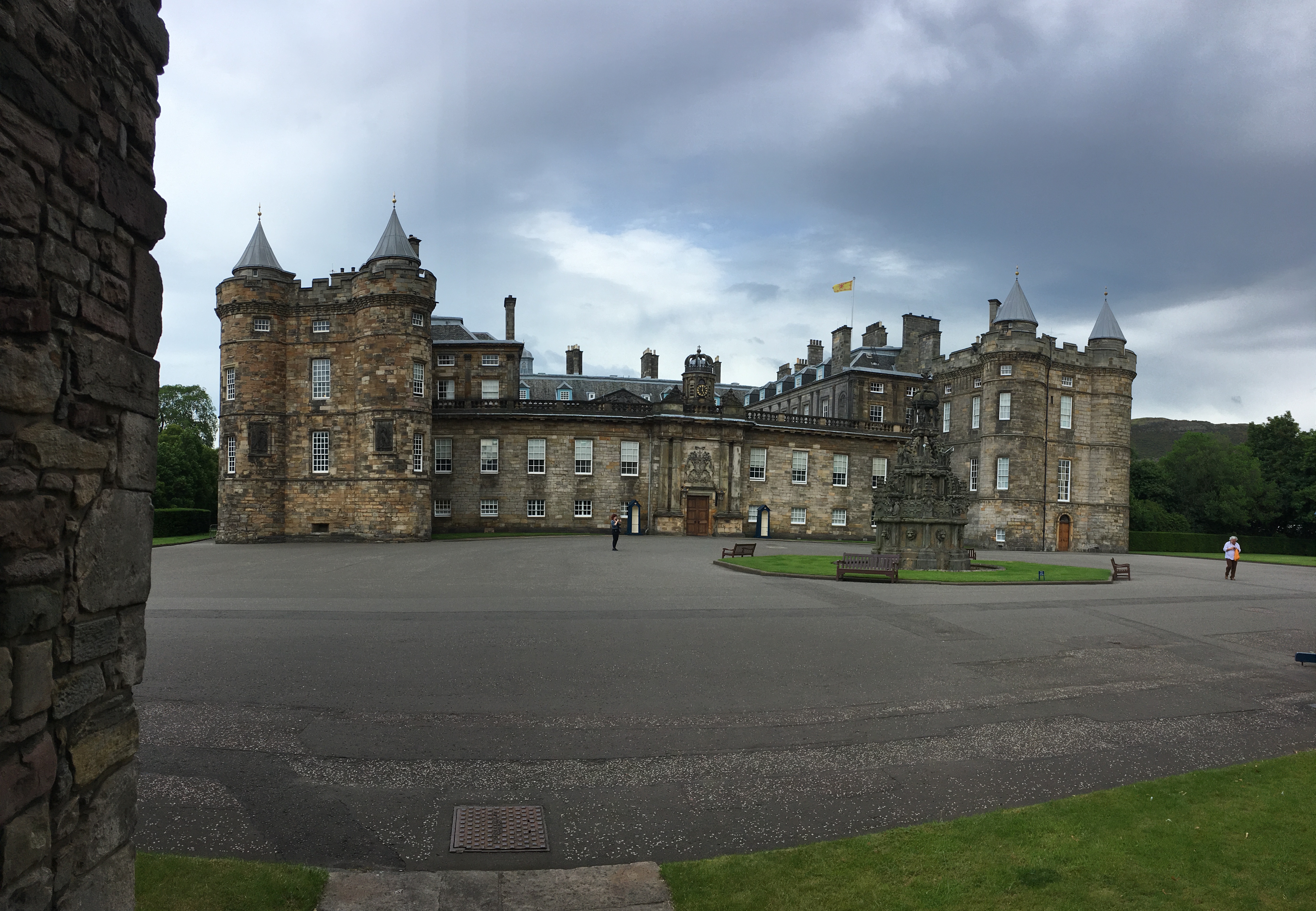
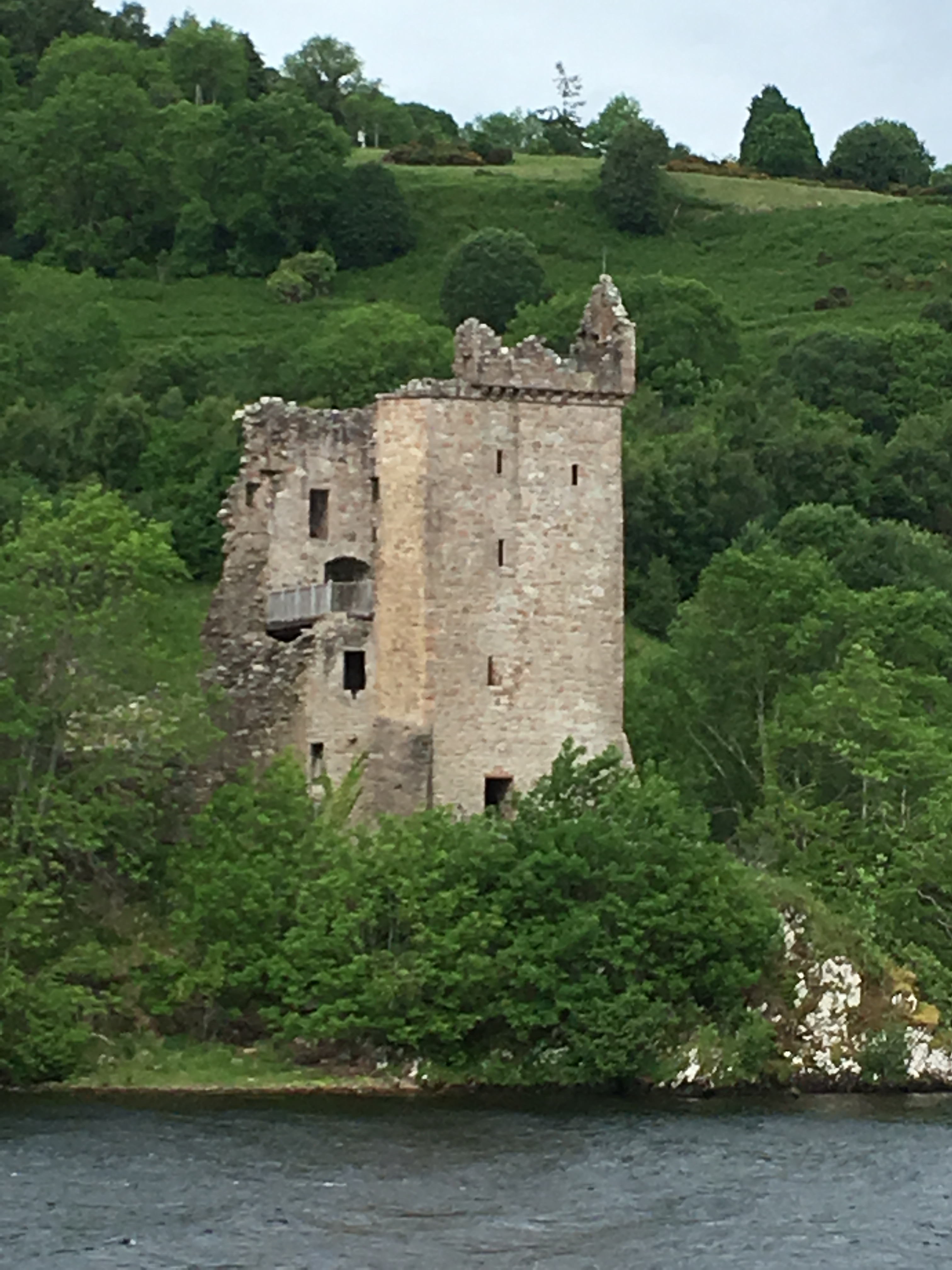
I have not been to Dundas Castle in Scotland, but I have been to a few others there. Can you tell this is one of my favorite things? Obsessed, I tell ya. Ob-sessed. It could be worse, right?
The following pictures are my own. Please see below for usage permission.
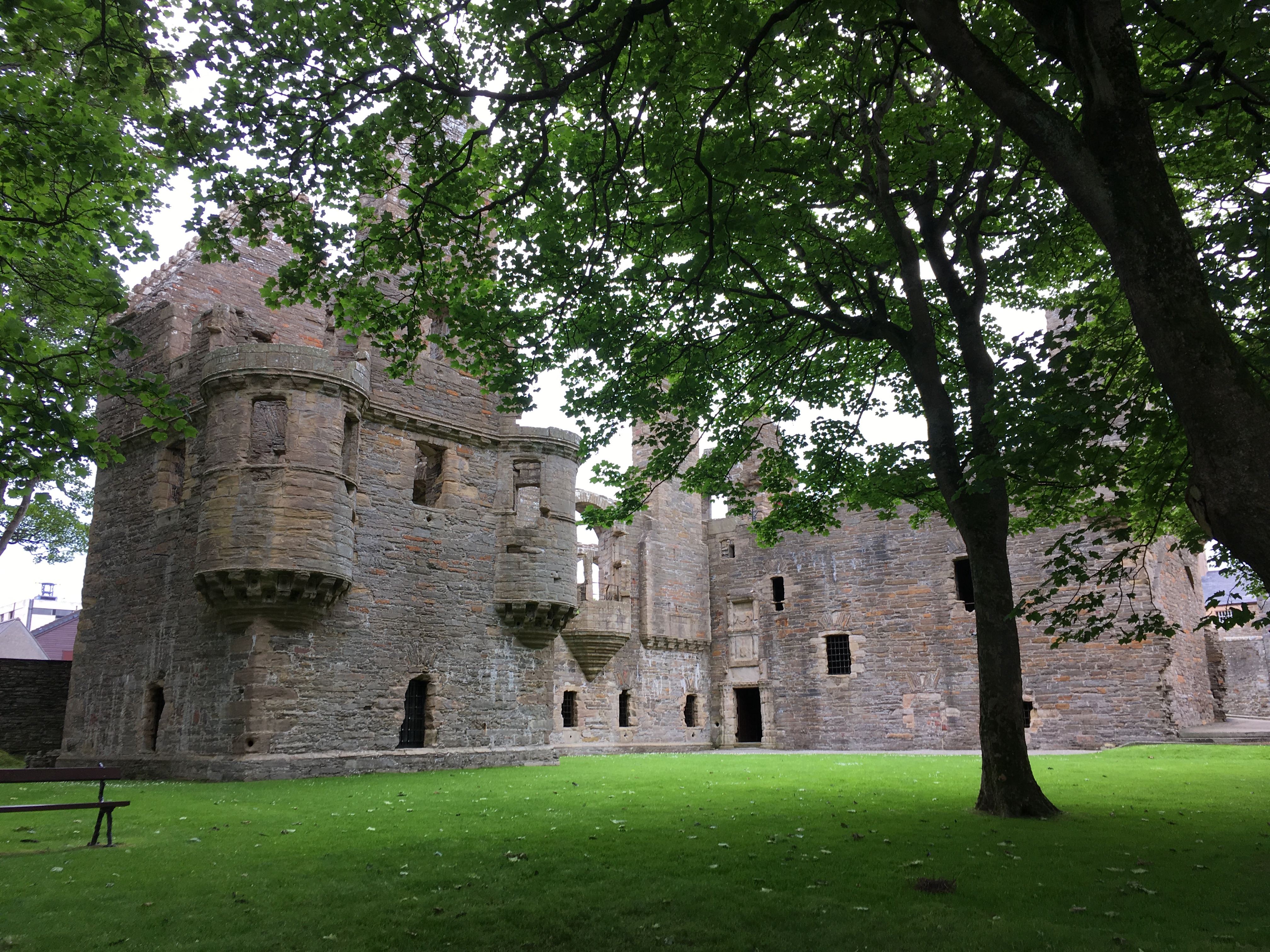
Bishop’s and Earl’s Palaces
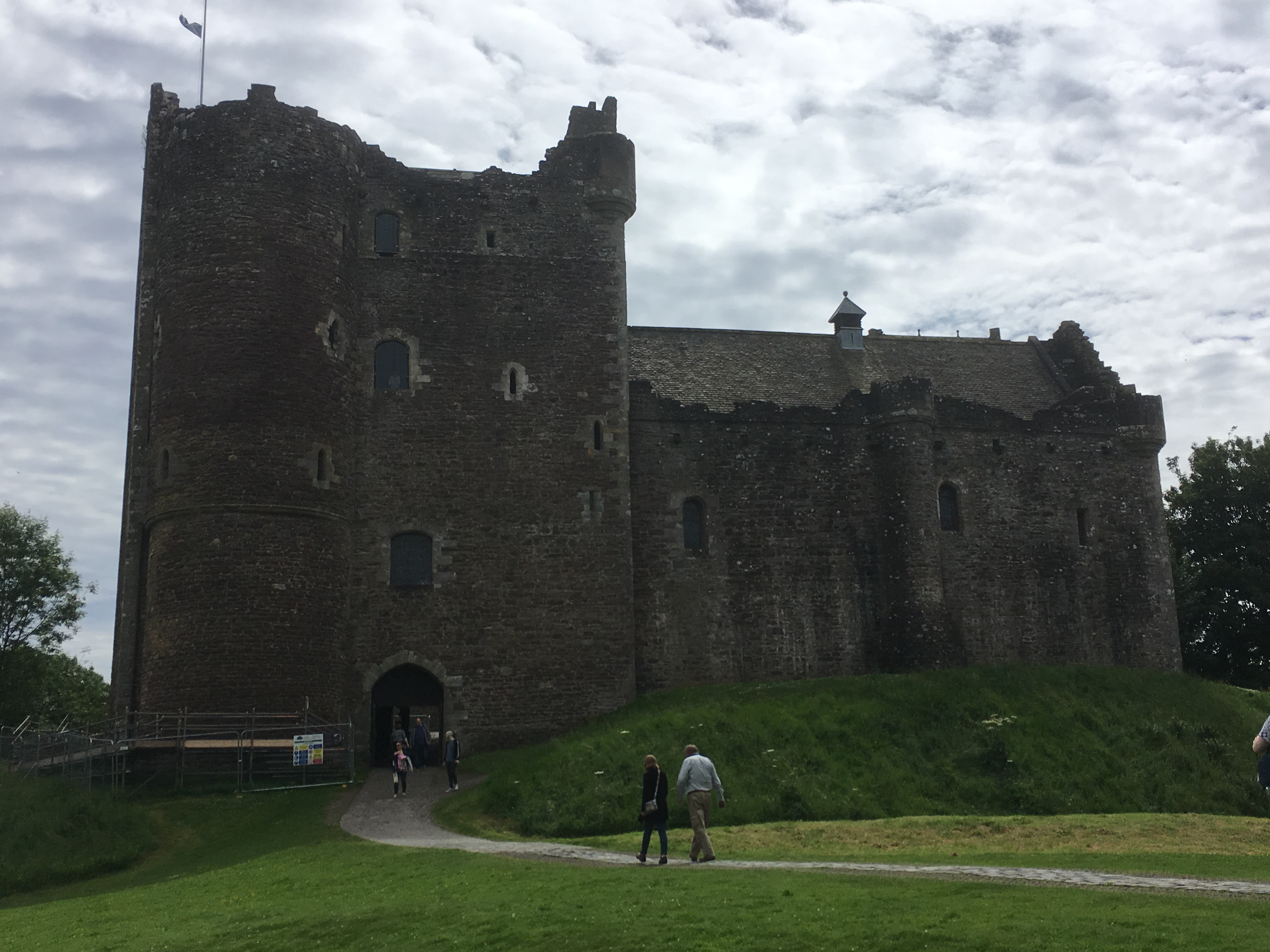
Doune Castle (known to Outlander fans as Castle Leoch)
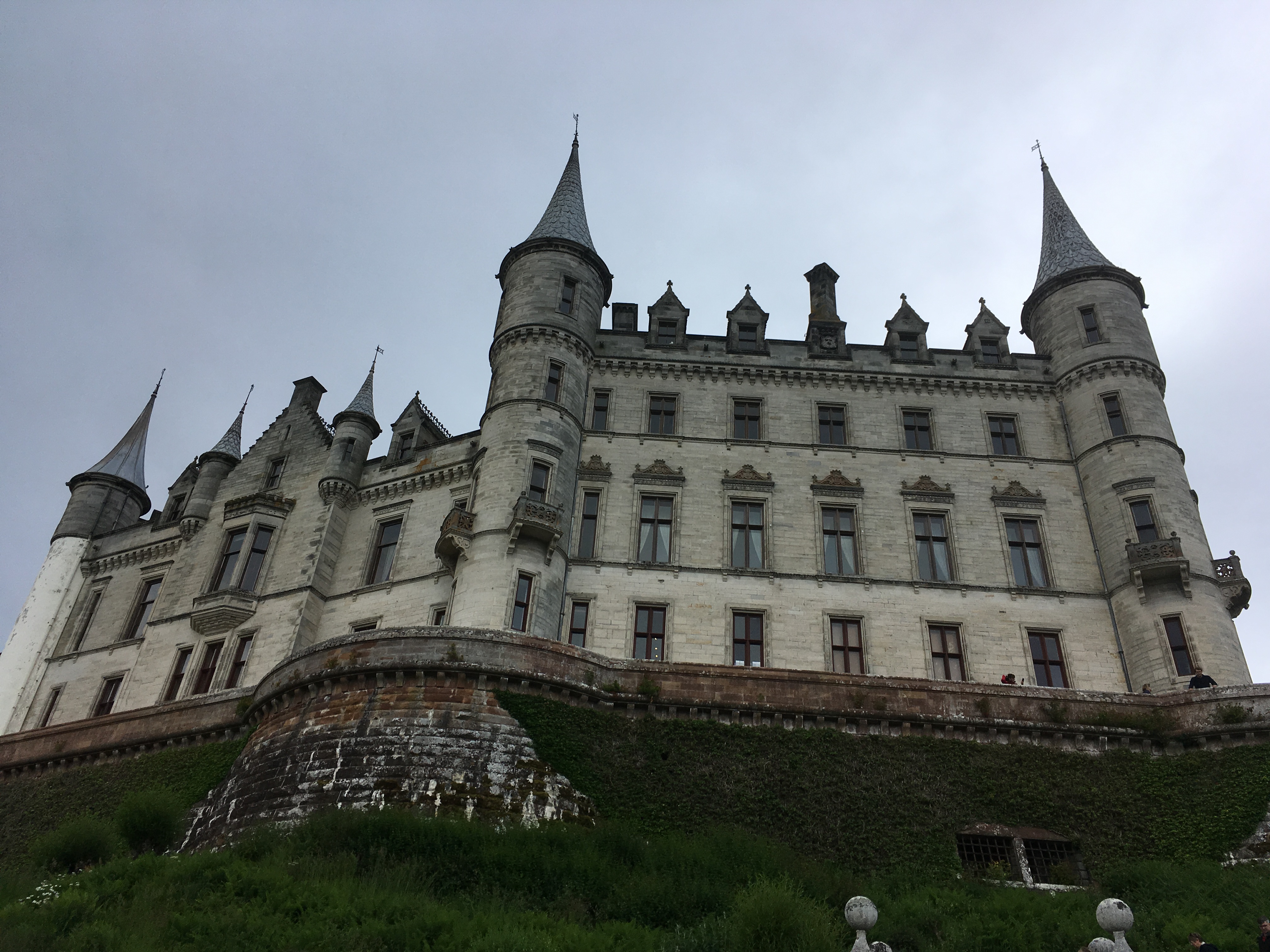
Dunrobin Castle (A Fairytale Castle)
Edinburgh Castle
Eilean Donan Castle
Falkland Palace
Glamis Castle (Setting of Shakespeare’s Macbeth)
Palace of Holyroodhouse (The Queen’s official residence while in Edinburgh and principal residence of Mary, Queen of Scots when she was alive.)
Stirling Castle
Urquhart Castle
Now go be the queen (or king) of your castle...and have a blessed day.
I allow the use of my images in this way: Creative Commons License With Creative Commons you are free: To Share: Copy, Distribute, and Transmit the image Under these conditions: Attribution: Attribution to TonyaUBrown and theroseandthethistle.com must be made along with the image.
The farther backward you can look, the farther forward you are likely to see.”
— Winston Churchill.
I am so glad you’re here. If you found me through Twitter, you probably already know that I am a writer of historical fiction who loves all things British–and in particular, Scottish. If you came here from Facebook, then you probably already know thatI have written a book about Mary, Queen of Scots. And if you know me from Instagram then you know that I like to post pictures of my travels and my kids–the two-legged ones and the four-legged one.
If you know me in person, then you know that I have a huge obsession with 16th century Europe and love to read about the Reformation and what life was like in that time period. I also like to read about the kings and queens of the medieval time period. You are likely to find any number of those topics on this blog.
I hope you love history as much as I do. If you do, then perhaps you’ll hang around and chat a while. Feel free to comment on what you liked, what you didn’t, and what topics you might like for us to discuss further.
Thanks for stopping by!
Tonya Brown
P.S. If you enjoy my blog, please like, subscribe and share with others!
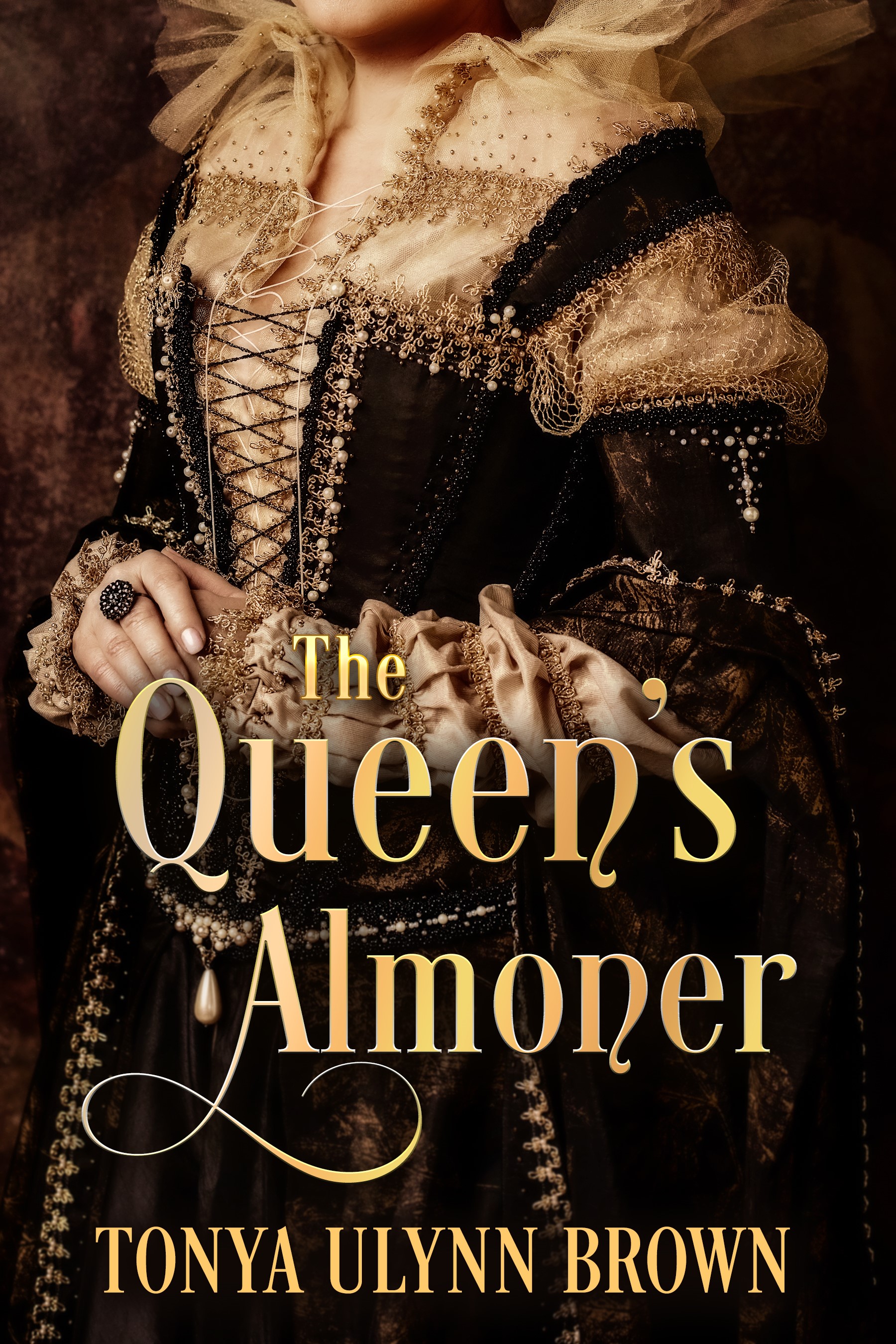
Thomas Broune is a Reformer and childhood friend of the young queen, Mary Stuart. When Mary embarks on a new life in her estranged homeland of Scotland, Thomas is there to greet her and offer his renewed friendship. But the long-time friends grow closer, and Thomas realizes his innocent friendship has grown into something more. Yet he is a man of the cloth. Mary is the queen of the Scots. Both of them have obligations of an overwhelming magnitude: he to his conscience and she to her throne.
When he must choose between loyalty to his queen or his quiet life away from her court, he finds that the choice comes at a high price. Driven by a sense of obligation to protect those he loves, and crippled by his inability to do so, Thomas must come to terms with the choices he has made and find a peace that will finally lay his failures to rest.






















 The Rose and the Thistle